
What Not: A Prophetic Comedy by Rose Macaulay (book review).
‘What Not: A Prophetic Comedy’ was written towards the end of World War One, or the Great War, as it was called then. People were tired of fighting, death and hunger. They were wondering what a peaceful future could hold for them and how to avoid another war. This was Rose Macaulay’s commentary on those speculations.
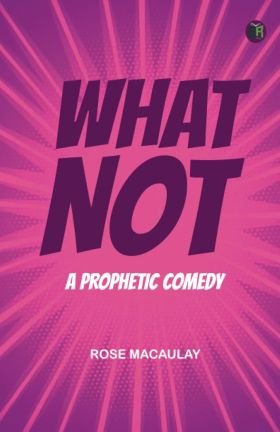
A Ministry of Brains has been set up in post-war Britain to increase the average intelligence of the population. This is to stop a repeat of the stupidity that led to the Great War. There are consequences.
The right types of people have to marry each other to produce the desired more intelligent younger population. Some are even barred from marrying, including the Minister of Brains himself, Nicholas Chester, who has an imbecile twin sister. Those approved pairings who had children get state bonuses, while the unapproved pairings are heavily taxed for their children. Inevitably, babies are abandoned in increasing numbers, much to the concern of the clergy and kind-hearted folk.
Another consequence is the Ministry setting up the Mind Training Course that people are obliged to attend, unless exempted. One example is for journalists above Type B2 so that the ministry can keep the journalists on their side. There are other exemptions, a few for practical reasons, and many as a political favour by the government to let it stay in power.
Kitty Grammont works in the Exemption Branch of the Ministry, having lately been returned from her temporary posting to the Propaganda Branch. She is efficient, knows what needs dealing with and what can go to the bottom of her in-tray, and is engaged to be married to a man roving around the world pursuing whatever cause takes his fancy. Kitty keeps on replying to his letters to disengage herself from him, but the letters always return unopened.
Inevitably, Kitty meets Chester, and they fall in love. They know they cannot marry and, for a short while, try just enjoying each other’s company, but they realise it does not work and have to part. As Chester is the minister, Kitty looks for another job. She is persuaded by her immediate boss to apply for a job on Intelligence, the Weekly Bulletin of the Brains Ministry. This would get her out and about reporting from the country and away from the ministry’s headquarters in London. It would also mean she did not have to give up her career as a civil servant. Of course, she gets it.
But fate takes another turn. Chester and Kitty meet again. From there things spiral beyond their control to their inevitable conclusions.
This novel was written several years before television became available to the population. The popularity of the cinemas had exploded during World War One as a form of escapism, but people still had to make an effort to go. It is therefore not surprising that ‘What Not’ has a lot of descriptions of places and people. What descriptions they are: short and succinct, yet bringing out the essence. This was brought home to me by the description of Chesterfield: ‘The awful, airless, panting night through which the Chesterfield furnaces flamed lay upon the queer, crooked black city like a menace.’ Those evoked memories of my childhood there, even though it was decades after this novel was set. One such is going up the road from the railway station towards the Crooked Spire when every brick was grimed black with aged soot. Nothing much had changed in the interim.
‘What Not’ has a lot of characters that are described as caricatures of typical people you would expect to meet in middle-class England. They dance around each other’s foibles and roles in a perfect precision of story and narrative. Even though this novella was written over a century ago, it lets you feel you are part of the crowd.
What of the science fiction side of things, you may ask? This is a novel about imposing eugenics on the population and what the reaction would be. People had for centuries already practised improving crops and farm animals by similar methods advocated here in the novel. It was a natural step to consider something similar for people.
‘What Not’ is considered to have been an influential precursor to Aldous Huxley’s ‘Brave New World’ with its ideas of eugenics and the impact of the press on people.
Rose Macaulay did come with the aerobus transportation system. There is even a scene when one of the aerobuses falls to the ground, which shows some consideration has gone into this idea. So, yes, even if ‘What Not’ is set shortly after the Great War, it does have an aura of being about the future.
As for the comedy side of things. Let’s just say, the way the civil service is dealt with reminds me of the later ‘Yes, Minister’ book. Its description is so vivid and like what happens in real life, it had me smiling a lot of the time. This is not the only comedic theme. There are many that deal with everyday lives included.
‘What Not’ suffered its own dystopian fate. Its publication was delayed to remove contentious parts that could have led to legal action being taken. It is believed this was about the depiction of the popular press trying to blackmail a government and a government minister. That omission has since been rectified. It is also perhaps why it did not receive the recognition it deserved at the time.
Call this science fiction being done to science fiction if you must. ‘What Not’ is of interest as an important historic science fiction novel that made a difference to the genre, which means it should be read by the cognoscenti. Yet its messages are still relevant to us today.
Rosie Oliver
December 2025
(pub: Zinc Read, 2024, originally published in 2018. 134-page paperback. Price: £6.69 (UK). ISBN: 978-93-6164-249-4)
Check out the website: www.zincread.com.