

Illustrators #49 (magazine review).
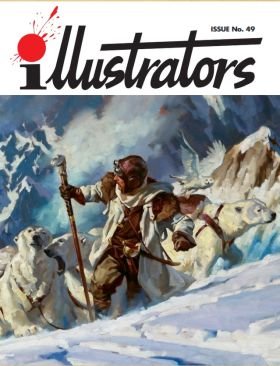
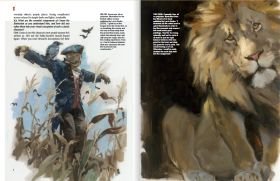
There are some times with the ‘Illustrators’ magazine that some of the artists selected are just jaw-droppingly awesome. This is the case with Gregory Manchess, as interviewed by Anthony Taylor. Manchess embraces oil and paints on anything but canvas, although I doubt from the paintings shown here you can spot the difference in texture because of it. His technique flows with motion, relying more on colour detail than following lines, and who wouldn’t love his polar bears as shown on the cover? When you get your edition, look at the paintings from a little further than table distance, and you’ll see them work at any distance. It’s a fascinating study in technique, although I think Taylor spends too many questions on who Manchess was influenced by, although I suspect all of them were diluted into what makes his art tick. Manchess also likes science fiction and fantasy, so look out for his books.
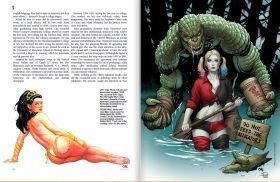
I haven’t seen many of Frank Cho’s covers over the years, but he’s in demand for his good girl art. Editor Diego Cordoba interviews him about his career and techniques. Another artist who doesn’t play with digital and inks with a technical pen and doesn’t rely on shadows, hence the clean lines. Some of his work here does use the fine lines for texture work. He also uses red ink. I was confused about where this was on some of the illustrations, but that’s often where the transition from line to colour happened, which is often done by others digitally. For just basic linework, his ‘Liberty Meadows’ work really turns it into an art (sic). I defy anyone to look at his art here and not find anything they didn’t like and even smile at.
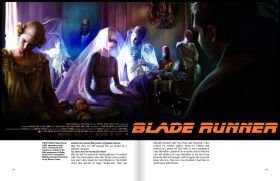
Just in case you think digital art is being forgotten, we come to Hannah Gillingham, whom Cordoba interviews. Although she started in pencils and oils, she learnt digital in her last year at university. I like her thoughts on Photoshop being expensive and exploring other digital art software. It isn’t like it has to be used, and most software can change formats to whatever the publisher wants. A lot of her work is doing alternative posters for films, as the studio likes a selection for different countries. Gillingham’s technique gets around doing exact likenesses and still knows who the characters are.
All contents copyright The Book Palace Ltd (c) The Book Palace 2025.
. I’ve never heard of ‘The Eternaut’, created by writer Héctor Germán Oesterheld and artist Francisco Solano López in Argentina and now, after many years, a Netflix SF mini-series. The history of the comic strip is also a political history of the problems in their country, although I’m not sure how much of it is reflected there. Even so, Oesterhold had to move countries or be arrested but still managed to get the scripts out to be drawn. An interesting history.
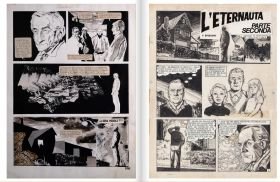
art: Francisco Solano López
All contents copyright The Book Palace Ltd (c) The Book Palace 2025.
Lastly, there is a complete ‘Wes Slade’ western story as created by George Stokes, to promote The Book Palace’s reprint next year. Stokes did this strip for over a decade, ending when he died. The quality of his art detail is jaw-dropping.
Have I convinced you to buy your own copy yet?
GF Willmetts
December 2025
(pub: The Book Palace, 2025. 114-page illustrated square-bound magazine. Price: £22.00 (UK), $27.99 (US) via Bud Plant. ISBN: 978-1-913548-03-2. ISSN: 2052-6520)
Check out the websites www.bookpalace.com and www.illustratorsquarterly.com.
