
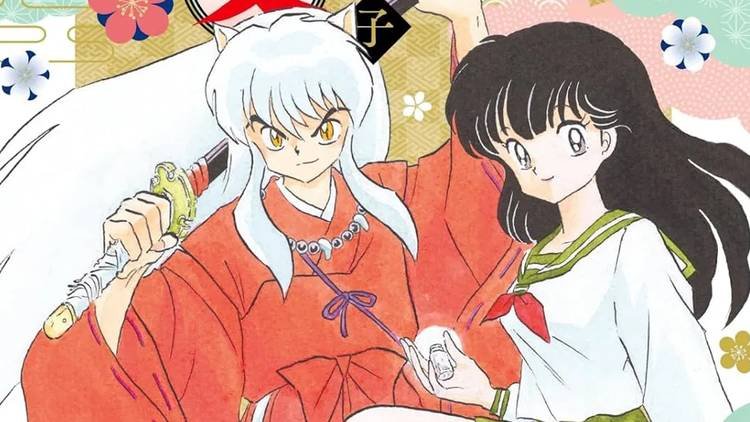
Thirty years ago, on 13 November 1996, Shogakukan’s Weekly Shōnen Sunday printed the first chapter of Rumiko Takahashi’s Inuyasha. In it a schoolgirl, Kagome Higurashi, is dragged down the well at her family’s shrine and climbs out in Japan’s Sengoku period, the age of warring states. There she frees a half-demon who has been pinned to a tree by a sacred arrow for fifty years, and the pair promptly manage to shatter the Shikon Jewel into enough fragments to keep them busy for 558 chapters and 56 collected volumes. The manga ran for more than eleven years, long enough for most romances to have produced grandchildren, and Kagome was still, with some regularity, slamming her beloved face-first into the dirt with a single word.
To mark the anniversary, Shogakukan published Inuyasha: Sengoku Otogizōshi, a 30th-anniversary collection of original artwork and interviews, in Japan on Friday. It gathers around 450 colour illustrations, including the manga’s colour pages, Shōnen Sunday covers and collaboration art, many of them appearing in an art book for the first time, along with interviews and behind-the-scenes notes on eight selected story moments. The publisher’s blurb teases questions such as whether Sesshōmaru was originally meant to die, which is precisely the kind of thing fandom will now argue about for another thirty years. It costs ¥5,500 in Japan and is in Japanese only, with no word yet of an English edition.
For English readers, the nearest substitute is VIZ Media’s 400-page The Art of Rumiko Takahashi: Colors 1978–2024, which covers Inuyasha alongside Urusei Yatsura, Maison Ikkoku, Ranma ½, RIN-NE and Mao, and sells in the UK for around £45.
Takahashi’s gift was to make a long-running monster hunt feel like a soap opera with swords. Inuyasha mixed feudal folklore, slapstick and a love triangle with a dead priestess (Kikyō, who rather spoils the romance by being rebuilt from clay and bones) into something that kept a generation of Western anime fans up late with Adult Swim and fansubs. It also helped show that a shōnen heroine could be every bit as central to the story as the boy with the enormous sword.
Here at SFcrowsnest we’d point out that it takes a rare franchise to turn 30 while its leading man is still technically a teenager, despite spending half a century nailed to a tree before the story even began. Rumiko Takahashi, meanwhile, has outlasted most of her own demons. Happy birthday to the dog boy.


Join the conversation (0)