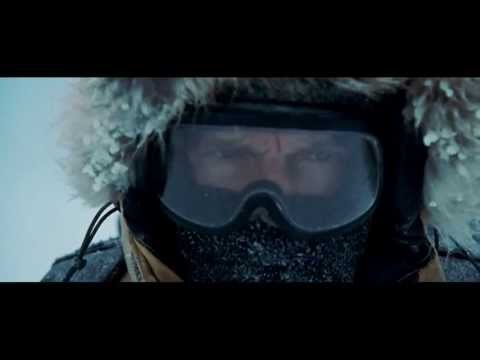
Twenty-two years after it froze New York solid, Roland Emmerich’s The Day After Tomorrow has done it again, only this time to Netflix. The 2004 climate catastrophe arrived on the American service on 1 November and was sitting at No. 1 on the US film chart by the next morning, according to FlixPatrol data reported by SlashFilm. It has stayed there all week, finishing top of What’s on Netflix’s points table for 1–8 November, ahead of every shiny new release the streamer could throw at it. Netflix’s own Top 10, with proper viewing figures, is due on Tuesday.
Not bad for a film that the scientists rather took against at the time. Andrew Weaver of the University of Victoria called it “The Towering Inferno of climate science movies” and pointed out that a new ice age arriving over a long weekend is impossible. Stefan Rahmstorf of the Potsdam Institute was kinder, calling it “a disaster movie and not a scientific documentary” while conceding the basic background was right. George Monbiot summed it up neatly in the Guardian: “a great movie and lousy science”. Roger Ebert gave it three stars and called it “profoundly silly”, which is about the most accurate review ever written of anything.
Here is the bit the streaming round-ups have skipped. The film is based on The Coming Global Superstorm, a 1999 book by Art Bell and Whitley Strieber. Bell was the voice of Coast to Coast AM, the late-night American radio show where callers rang in about Bigfoot, time slips and the men in black. Strieber is the horror novelist behind The Wolfen and The Hunger, and the author of Communion, his 1987 bestseller about being visited, and rather more than visited, by aliens with large black eyes. He also wrote the film’s novelisation. So one of Hollywood’s most famous climate-change films began life with a UFO abductee and a paranormal phone-in host, which is either a triumph of popular science or the most Fortean thing ever to gross $552 million. Possibly both.
To be fair to the pair, the book’s central idea was not plucked from a flying saucer. The Gulf Stream and the wider Atlantic Meridional Overturning Circulation (AMOC) carry warm water north and keep Britain feeling more like Bordeaux than Labrador. Stop that conveyor and the North Atlantic gets a great deal colder. The film turns this into tornadoes in Los Angeles, a tidal wave down Fifth Avenue and Jake Gyllenhaal burning the New York Public Library’s tax law books to keep warm, while sensibly saving the Gutenberg Bible. Real oceanographers think in decades and centuries rather than in the length of a Dennis Quaid road trip. But they have not stopped worrying about the current. A run of recent studies has warned that it is closer to collapse than scientists once thought, and the places it would hit hardest include north-west Europe. Us, in other words.
There is a British thread through the film, too. Ian Holm plays Terry Rapson, a Scottish oceanographer whose research station gets the first proper look at the end of the world, and who faces it with an admirably stiff upper lip. The film also won the BAFTA for special visual effects. As disaster films go, it is a very British apocalypse: the scientists are right, nobody in charge listens, and the weather does the rest.
Why is everyone watching it now? Netflix’s charts are full of comfortable catalogue titles this month, and an old blockbuster with a recognisable poster tends to do well when the clocks have gone back and the evenings are cold. Still, there is something fitting about a film where the heroes survive by holing up in a library and reading as little as possible becoming America’s favourite thing to watch in November.
Whether Strieber’s visitors were warning him about the weather all along is a matter for Coast to Coast AM. The rest of us can just keep an eye on the Atlantic, and maybe move the Gutenberg Bible somewhere warmer.



Join the conversation (0)