

British science fiction has lost one of its great stalwarts. Malcolm Edwards, editor, publisher, critic and one-time fanzine firebrand, spent the better part of half a century deciding which SF books ended up on British shelves. He has died at the age of 76. SFcrowsnest has confirmed the news through its own contacts, though the circumstances of his passing have not yet been made public.
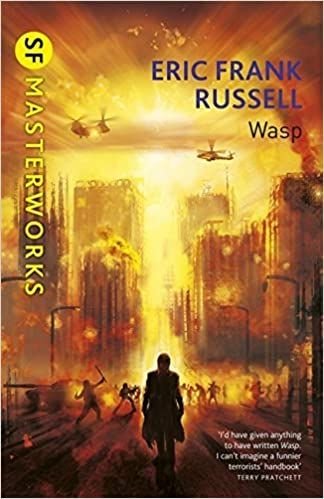
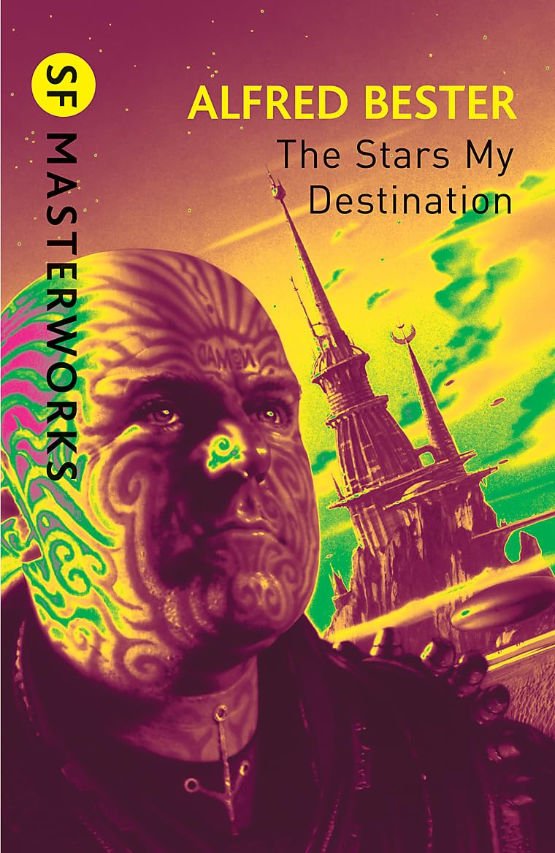
If you own a numbered SF Masterworks paperback, you have Edwards to thank. If you are reading this site, you probably own a whole shelf of them. He once explained that the series began on the day he discovered that Bester’s The Stars My Destination and Haldeman’s The Forever War were both out of print. Most of us would have muttered into our pint. He made a list. The series has had the occasional spell on hold but is still running and is now approaching 200 titles, with a Fantasy Masterworks companion he co-edited with Jo Fletcher. It is the nearest thing the genre has to a national library you can buy on the high street.
Tributes soon began to appear. William Gibson, whose Neuromancer Edwards brought out in Britain, wrote that he was “saddened to learn of the death of my dear friend Malcolm Edwards, my first British editor, who in my opinion had no equal in the language. Not only brilliant and deeply kind, but superbly comical as well.” Ellen Datlow was among those adding their own sympathies.

Edwards graduated from King’s College, Cambridge, in 1971 with a degree in social anthropology. He came up through the Cambridge University SF Society and arrived in British fandom to find an identity crisis waiting for him. Shortly before he became active, Peter Weston had used “Malcolm Edwards” as a pseudonym for some of his fan writing, so the real Malcolm spent his early fannish career being mistaken for somebody else’s invention. He solved the problem by becoming impossible to ignore. His fanzine Quicksilver printed the first complete text of James Blish’s “The Science in Science Fiction” in 1971.
He went on to edit the BSFA’s Vector from 1972 to 1974, and from 1978 to 1980 he ran the Science Fiction Foundation and edited its journal, Foundation. Later fanzines included Tappen and the cheerfully indiscreet Drunkard’s Talk. He won the Doc Weir Award in 1974 and a Nova Award for Tappen in 1981, helped organise the successful Britain in ’79 Worldcon bid, and chaired Conspiracy ’87 until about nine months before the convention.
He was also a contributing editor to the first edition of The Encyclopedia of Science Fiction in 1979, and one of the two principal founding board members of Interzone. His only published SF story, “After-Images”, appeared in Interzone in 1983 and won a BSFA Award. One story, one award. Few writers can boast that batting average.
His day job started at Gollancz in 1976, at the house of the famous yellow jackets, and by the 1980s he was Publishing Director. The list he built there included Brian Aldiss, Octavia Butler, Arthur C. Clarke, Philip K. Dick, Frank Herbert, Ursula Le Guin and Terry Pratchett. In 1984 alone came Gibson’s Neuromancer and J.G. Ballard’s Empire of the Sun, which Edwards edited. That is not a bad year’s work by anyone’s reckoning.
Spells at Grafton and HarperCollins followed, and he was named Editor of the Year at the British Book Awards for 1995. In 1998 he joined Orion Books as managing director. Orion soon bought Gollancz, and in 2003 he became Deputy CEO and Group Publisher, with every genre editor in the merged firm reporting to him.
So he ended up back where he had started, only now he owned the building. Over the years he also worked with Stephen King, Tom Clancy, Robert Ludlum and James Patterson, which suggests he could spot a bestseller as readily as a masterpiece. During Edwards’s later years at the head of Orion and Gollancz, the house published Stephen Hunt’s Far-Called novels, the flintlock-and-airship trilogy that began with In Dark Service in 2014 and ran through Foul Tide’s Turning and The Stealers’ War. Nobody on that list ever doubted that the Gollancz they were writing for was the one Edwards had built!
In 2015 he gave up his executive roles to chair Gollancz and act as Orion’s consultant publisher. He left both posts at the end of May 2019 and later that year moved to a fiction-publishing role at André Deutsch. When he retired from Orion, Hachette UK chief executive David Shelley described him as a genuine publishing legend. Retirement, plainly, did not take.
He also had a wonderfully daft streak. With his friend Robert Holdstock he produced a run of illustrated coffee-table books: Alien Landscapes, Realms of Fantasy, Lost Realms and others. Tour of the Universe had its theme-park rights sold, which led to a simulated interplanetary shuttle ride that ran in Toronto’s CN Tower from 1986 to 1990. Few authors of a picture book can say their work became a fairground attraction. The pair also wrote a horror paperback, Succubus, published by Sphere in 1985 under the joint byline John Stockholm. With Maxim Jakubowski he compiled The Complete Book of Science Fiction and Fantasy Lists, a trivia hound’s compendium that is often very funny and also full of solid information that is hard to find anywhere else.
The best portrait of the man may be the one David Langford wrote when Edwards was Fan Guest of Honour at the 1987 Eastercon. Langford describes him as quiet and owlish until a few lagers had gone down, after which his anecdotes about SF publishing and SF fandom grew steadily less repeatable. In Langford’s best story, Edwards delivers a scabrous one-liner about Heinlein and then nervously asks for it to be struck from the record, “because I’ve just remembered he’s one of our authors.” That one moment captures the fan turned publisher, and anyone who ever shared a convention bar with him will recognise it. Loncon 3 made him a Guest of Honour in 2014, which was a fitting salute from the fandom he never really left.
Good editors are invisible by design. Their names sit in the acknowledgements, while the authors get the cover lines and the convention queues. To measure Malcolm Edwards, look at your own bookshelves. A remarkable number of the spines are there because he believed they should be. Our thoughts are with his family and friends.



Join the conversation (0)