
At dawn on 14 April 1561, the good burghers of Nuremberg looked up and saw the sky having a row with itself. Hans Glaser’s broadsheet records globes, crosses, tubes and a great black spear-shaped object apparently knocking seven bells out of one another before some of the combatants fell smoking to earth. Historians generally file this under atmospheric phenomena. UFO enthusiasts file it under Exhibit A, and have done since roughly the invention of the paperback with a flying saucer on the cover.
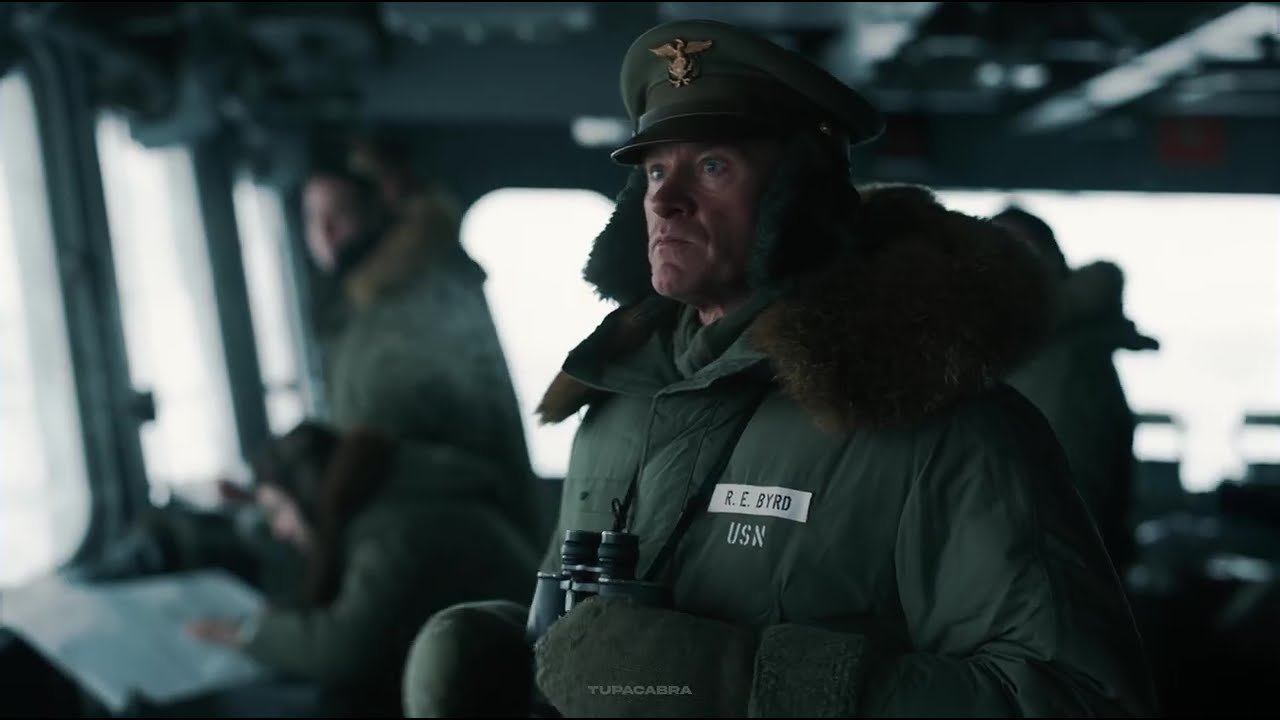
Four hundred and sixty-five years later, a creator going by the name TUPACABRA, who describes the account as UFO research and media, has turned that morning into an 87-second trailer for a film called NUREMBERG. It was made with Venice AI and posted on X on 13 November, and by the time the Author Update podcast’s Thomas and Jonathan sat down to chew it over, it had passed 30 million views. A 4K version now sits on YouTube, above. There are no actors, no studio and, crucially, no catering truck.
It is not, we should stress, last year’s Nuremberg, in which Russell Crowe played Göring and nobody arrived by time portal. This one has rather more going on. Two timelines run side by side, one in which America wins the Second World War and one in which the Nazis do, and they collide at awkward historical junctions. Future soldiers fight in the past. Nikola Tesla turns up, as does Elizabeth I, along with what appears to be John Dee’s celestial switchboard, Nazi flying discs, and a fleet bursting out of the Antarctic ice for the benefit of anyone who has spent too long reading about Admiral Byrd. At the centre of it all is the Holy Lance, which really was kept in Nuremberg among the imperial regalia for centuries. It’s Indiana Jones by way of a Fortean Times back catalogue, and here at SFcrowsnest we mean that as a compliment.
The numbers are what have the industry clutching its lanyards. By the hosts’ reckoning, the trailer pulled more than twice the views of Steven Spielberg’s latest picture, which, with a certain cosmic irony, is his own UFO film, Disclosure Day. It did so during Grand Theft Auto week, which is a bit like getting noticed at a wedding while the groom is on fire. They also reckon the whole thing could be done for something like $10,000 to $20,000 in AI tokens, against the $100 million to $300 million a studio would spend on a sci-fi tentpole. Their central point is that the economics have flipped. The cool set pieces, which used to cost a million dollars or more a minute in the Michael Bay era of transforming lorries, are now the cheapest part of filmmaking. The expensive bit is two people talking. AI still drops into the uncanny valley the moment its characters have to share a feeling, so, in Thomas’s words, “we’re back to needing good actors again.”
Their other argument is about committees. Put a $200 million film through enough executives, or a novel through enough publishing boards, and the personality gets buffed off like the shine on a well-handled conker. NUREMBERG keeps all its weirdness because nobody was in a position to ask whether the Elizabethan bit tested well with the 18 to 34s. The hosts are fair about the downside: remove the committee and you allow for genius, but also for “a level of idiocracy” no committee would permit, so for every Nuremberg there will be a few thousand seven-fingered horrors. Then again, committees aren’t foolproof either. Somebody signed off on Cats.
The cleverest thing in the trailer isn’t generated at all. The soundtrack is a crackling old recording of Kipling’s “Boots”, the 1903 poem about a soldier marching across Africa who is slowly driven mad by the boots of the man in front. Hiss and all, it does more for the atmosphere than any number of rendered zeppelins, and it works because it drags in the dread you already brought with you. The hosts claim the recording turns up in American military training for hostile interrogation. Jonathan, a veteran, explains that Marines avoid boot-induced madness with cadences, the call-and-response marching songs that keep a column’s mind busy. Which may explain why nobody in the Corps has ever lost their marbles halfway through “I don’t know but I’ve been told”.
Some perspective is in order. A trailer is ninety seconds of greatest hits, and the reasonable grumbles on X are that it doesn’t tell a story and that nobody has yet held a consistent character together for ninety minutes. TUPACABRA says the film is genuinely in production, that they are its sole creator, and that anyone claiming otherwise is a scammer. That’s encouraging, though “in production” has covered a multitude of sins since long before AI. Thomas is right about one thing, though: AI didn’t make this. A person with a head full of Holy Lances and Antarctic U-boats made it, and that person chose Kipling.
It is the fantasy and science fiction crowd who ought to be paying closest attention. Cosy crime writers have always had an easy run to the screen, since all you need is a vicarage and a corpse. Anyone whose novel features a dragon, an orbital ring or a sky battle over a medieval city has spent decades waiting for a studio to find the special effects budget, and then watching the studio change everything once it had. That bottleneck now looks a lot narrower. The burghers of 1561 never did find out what they saw over the rooftops that morning. Their descendants can at least tell them it turned out to be content.



Join the conversation (0)