

The Collected Stories by Cixin Liu (book review).
For the majority of us who read fiction, most of it appears on the shelf as written in the author’s first language, English. With the plethora of books available, it is easy to forget that only about 5% of the world’s population have English as their first language. Mandarin Chinese has the most native speakers. There are good writers in that language, but we hear about very few of them because the work has to be translated. That in itself is an issue, as it is not just a case of translating the words but arranging them so that the original sense is not lost.
When a brilliant translator is matched with an equally skilful writer, the results are excellent. Usually, it is the author that gets the praise, and the translator is largely ignored. Cixin Liu is the winner of the first Hugo Award for a translated novel for ‘The Three-Body Problem’, but it is nice to see that in the copyright credits for this collection, the translators, like Ken Liu, also get a mention.
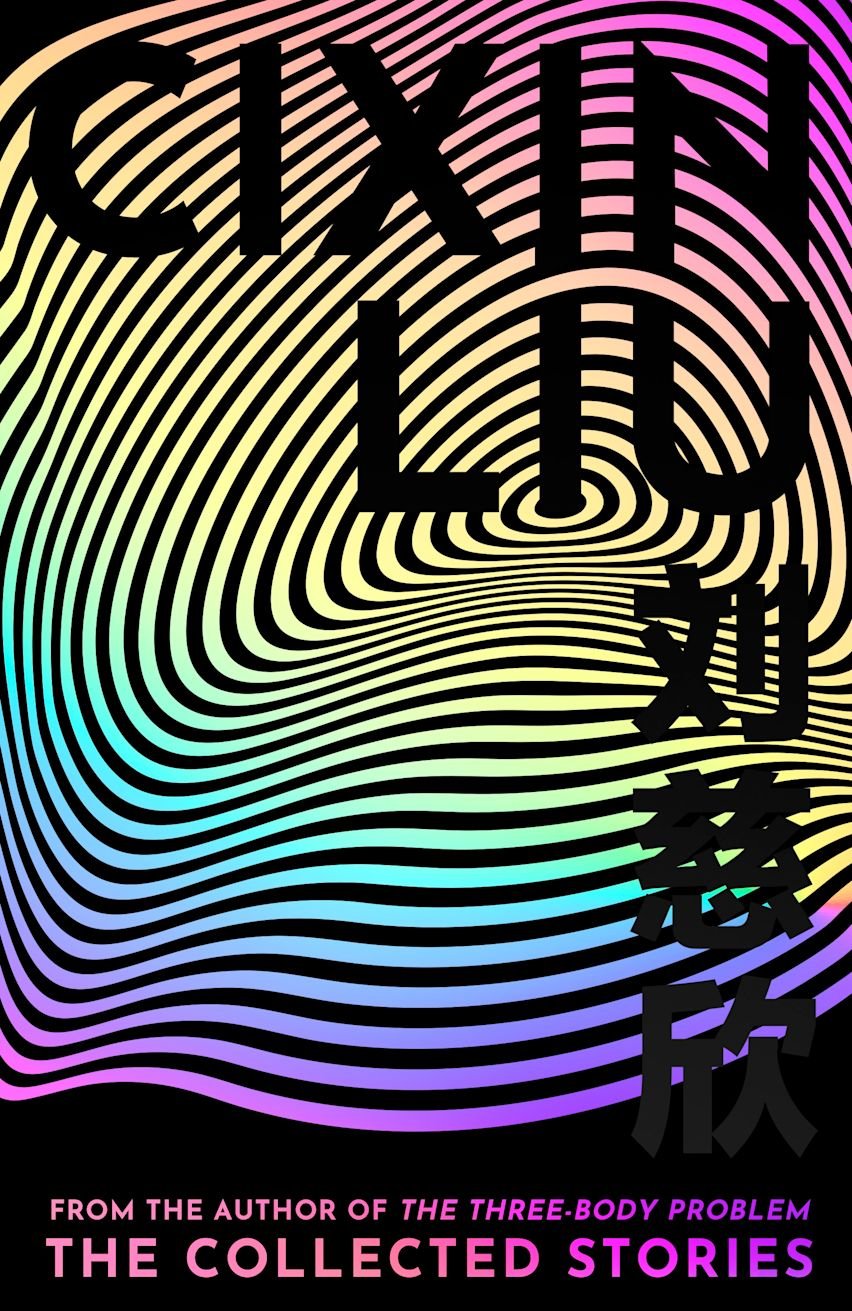
This volume of ‘Collected Stories’ contains 32 pieces, many of them of novelette or novella length. Many of them have a scientific base concerning developments that have unexpected results, which often create disasters rather than making life easier.
‘Whale Song’ is a good example of unanticipated consequences. A drug baron is trying to find new ways to smuggle his merchandise into the USA. He comes up with the idea of hiding his submarine inside a blue whale, but he hasn’t reckoned with the prevalence of illegal whaling.
A use of science going wrong is featured in ‘End Of The Microcosmos’, when the scientists use a huge particle accelerator to attempt to split a quark. Another story that features a particle accelerator is ‘Heard It In The Morning’. This time the accelerator is even bigger, encircling the planet. Its use is stopped at the last moment by an alien, who in turn strikes a bargain with scientists to give them the answers they seek if they agree to die ten minutes after enlightenment.
Many authors seed characters or situations from one story into another. ‘With Her Eyes’ is one of the science-gone-wrong stories. When the narrator goes on leave, he wears special glasses that enable someone else to experience what he does. It is a cheaper way of allowing astronauts to have a break on Earth without the expense of bringing them back. He is linked with a woman who he discovers is in a vehicle that is trapped in the molten core of the planet with no chance of rescue. ‘Cannonball’ is the story that explains how she was trapped. Initially, holes are drilled into the crust as a means of disposing of nuclear weapons, and it is a problem with that process that traps the woman in ‘With Her Eyes’.
In ‘Taking Care Of God’, millennia-old spaceships arrive, Liu has a fondness for visiting aliens, and the inhabitants declare that they are the ones that seeded the planet and, therefore, they are effectively God. There are those who have decided that their descendants should look after them in their old age, and there are two billion of them. Thus, each family hosts a god. At the end, the gods leave. ‘For The Benefit Of Mankind’ is a sequel. Before they leave, the gods say that there were four other planets they had successfully seeded. When the wealthy of Earth find out what has happened to the society on the first of these, they want to stop the same thing from happening to Earth and employ a trained assassin to kill those who refuse a share of their wealth.
Many of the visiting aliens do not have Earth’s best interests at heart. In ‘The Village Teacher’, they come looking for signs of civilisation. They don’t find it until they reach a remote Chinese village where the local teacher has taught his pupils to recite Newton’s laws. Then they pass the test.
In ‘Devourer’, a giant generation ship crewed by very large lizards arrived with the intention of demolishing the Earth to fuel their ship. The humans—they intend to take them on board and farm them for food. ‘Of Ants and Dinosaurs’ is a prequel to this story. It tells of the rise of a civilisation in the Cretaceous era that was a cooperation between dinosaurs and ants. What started as the ants offering a tooth-cleaning service to carnivores like T. Rex tracked the same development path as H. sapiens would later take.
The dinosaurs came up with the ideas, and the ants collectively did the delicate manipulations that the dinosaurs couldn’t manage. They even managed space flight. When the relationship broke down, the destruction wiped most of the living things from the planet’s surface. The dinosaurs that escaped the disaster into space returned millennia later as the Devourers. ‘Cloud of Poems’ is a follow-up story. Dinosaurs and humans are living inside a hollow Earth. Another being the dinosaurs’ regard for God as having arrived. A resurrected Chinese poet, Li Bai, is challenged to add his poetry to the Cloud of Poems, a physical entity made of 1040-minute storage devices circling the universe outside the hollow Earth.
Poetry isn’t the only art form aliens are interested in. The alien in ‘Sea Of Dreams’ appears at an ice sculpture festival and proceeds to turn all the Earth’s oceans into orbiting ice sculptures, which has drastic effects on the climate. Music is the theme of ‘Ode To Joy’, as, during a concert, a huge, apparently sentient mirror appears in the sky and creates music using the cosmos.
Mirrors are also a focus of ‘Sun Of China’, which is the story of one man’s life journey to be a worker on the mirror in space, which provides reflected power from the sun to China. Naturally, as a Chinese writer, Cixin Liu puts Chinese developments and scientists at the forefront of his stories even if things go wrong, such as in ‘Fire In The Earth’, where an attempt to convert coal into gas while still in the ground, while a good idea, sets the whole seam alight.
Contraction is an example of scientists making a discovery that they initially find exciting until it happens. The expansion of the universe has been slowing, and they gather to observe the point at which it begins to contract. Time also goes into reverse. In ‘The Wandering Earth’, the discovered phenomenon is that the sun is predicted to explode in the near future. As there are not enough time or resources to build a fleet of generation ships to take the whole population to safety, the decision is made to set the whole planet on a trajectory to Alpha Centauri.
There are plenty of other memorable stories in this volume covering a range of different SF ideas. It would have been nice to have connected stories placed next to each other since, because of the size of this volume, many readers may prefer to dip into it rather than read it all in one go. What it does, though, is give a different perspective on the world that is so often viewed from an American aspect.
Pauline Morgan
January 2026
(pub: Head of Zeus, 2025. 936-page hardback. Price: £25.00 (UK). ISBN: 978-1-035590-393-1).
Check out the website: www.bloomsbury.com/uk/collected-stories-9781035903924/