
Somewhere inside YouTube, beneath the unboxing videos and the men shouting at thumbnails, sits a perfectly respectable cinema. It is called Movies & TV, and one shelf of it is labelled Free with ads: proper feature films, studio logos and all, which you can watch for nothing more than the occasional interruption from an insurance company. When we went through it this week, it held 498 titles. We sorted the lot so you don’t have to, and fished out everything with a spaceship, a spectre, a sword, a werewolf or a suspiciously blurry light over Arizona.
Two practical notes first. When we visited signed out, the shelf came up completely empty; signed in to a UK account, all 498 films appeared, so it is worth logging in before you conclude the whole thing is a mirage. And YouTube’s catalogue rotates, so treat the links below as a snapshot of late November 2026 rather than a promise carved into a monolith.
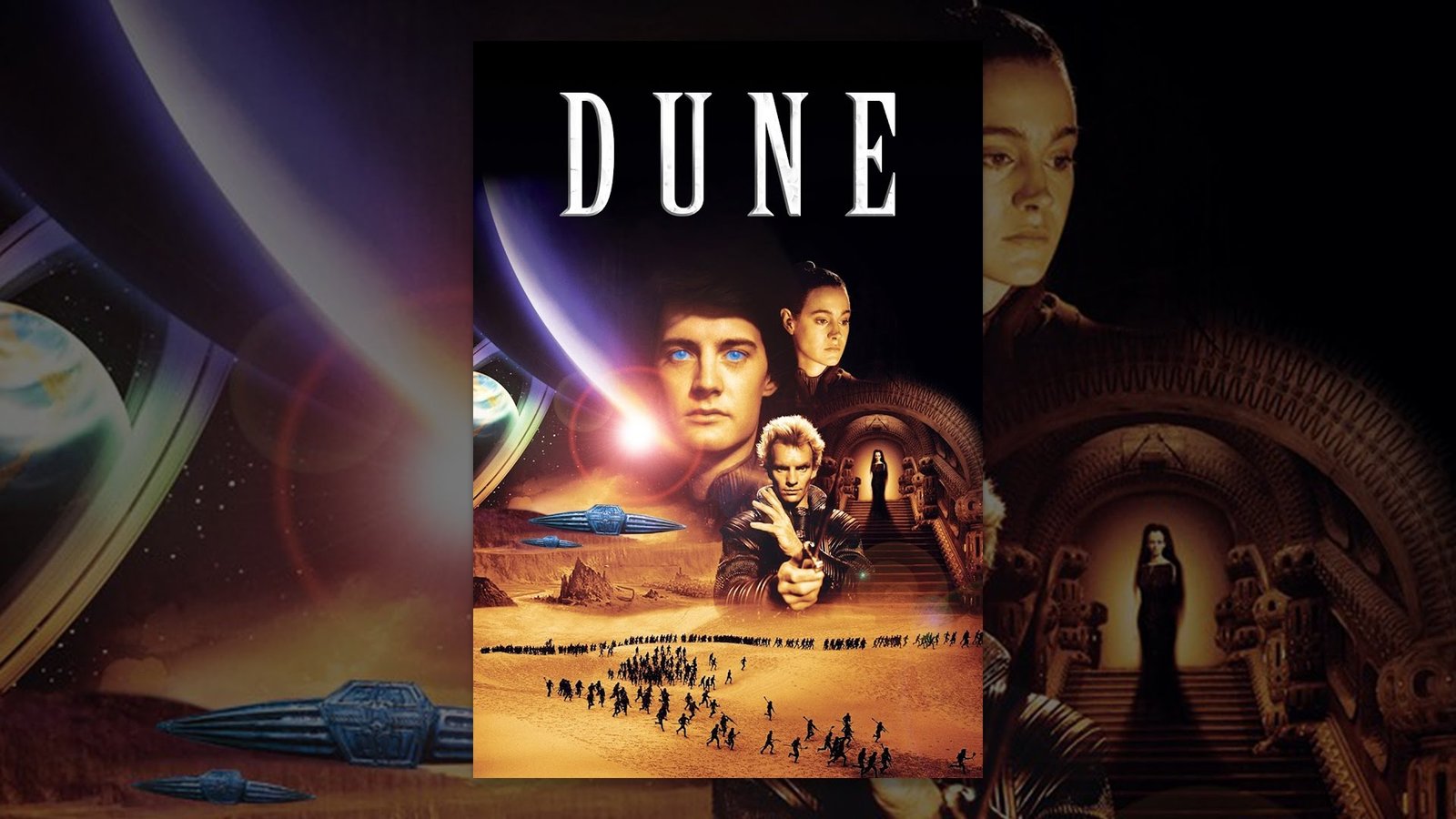
The headliner, by a distance, is David Lynch’s Dune (1984), which YouTube has filed under “Action and adventure” and titled, with the air of a man reading a label off a VHS box, “Dune 1984”. Forty years on it remains the most gloriously strange big-studio space opera ever released: Sting in his winged underpants, a Guild Navigator in a fish tank, and a voiceover that explains the plot in the manner of a nervous best man. Now that Denis Villeneuve has given us the tasteful version, Lynch’s fever dream looks less like a failure and more like a dare.
Behind it sits a decent run of the genuinely good. Philip Kaufman’s Invasion of the Body Snatchers (1978) still has the best final shot of any paranoid SF film, and Donald Sutherland’s face in it will stay with you longer than your mortgage. Donnie Darko (2001) is there for anyone who wants a giant rabbit to explain time travel to them again; Super 8 (2011) is JJ Abrams doing his best impression of a 1982 Spielberg film; Eternal Sunshine of the Spotless Mind (2004) remains the only memory-erasure romance that actually earns its tears; and WarGames (1983) is a reminder that we were warned about letting computers play with nuclear weapons back when the computer in question had a smaller memory than your doorbell. Ender’s Game (2013) completes the respectable end of the shelf.
The less respectable end is, naturally, more fun. Meteor (1980) is a disaster movie in which Sean Connery and Natalie Wood try to save the Earth from a large rock, with the special effects budget apparently spent on one shot and a lot of prayer. Space Raiders (1983) is a Roger Corman production about a ten-year-old boy accidentally kidnapped by space pirates, and those spaceships may look familiar if you have ever sat through Battle Beyond the Stars. James Spader turns up twice, as if he came with the furniture: once in the troubled deep-space rescue thriller Supernova (2000), and again as an alien expert poking at something nasty in the Antarctic ice in Alien Hunter (2003). Here at SFcrowsnest we consider any evening with two Spader space films to be an evening well spent.
The comedy shelf is better stocked than you might expect. Spaceballs (1987) has aged into something like scripture for anyone who grew up with it, and Bill & Ted’s Bogus Journey (1991) remains the only sequel in which our heroes beat Death at Battleship. Both Hot Tub Time Machine (2010) and Hot Tub Time Machine 2 (2015) are available, for those who believe that H.G. Wells’s central mistake was insufficient jacuzzi.
For fantasy, the early eighties have been raided with some vigour. Labyrinth (1986) brings Jim Henson’s puppets and David Bowie’s trousers; The Dark Crystal (1982) brings Henson’s puppets without the trousers, and is still the most frightening thing ever marketed at children. The Beastmaster (1982) offers Marc Singer, a ferret and a level of loincloth commitment rarely seen outside a Frazetta painting, while Don Bluth’s The Secret of NIMH (1982) proves that rats escaping a laboratory can be more moving than most human drama. Further along you’ll find Rik Mayall at his most anarchic in Drop Dead Fred (1991), Neil Jordan’s spectral Irish farce High Spirits (1988), and all nine volumes of the web-anime RWBY, which is roughly a weekend if you don’t sleep.
Horror is where the shelf really earns its keep. Murnau’s Nosferatu sits a few rows from Hideo Nakata’s Ring (1998), which makes for an entertaining double bill on the theme of things you should not have watched. Corman and Vincent Price give you The Pit and the Pendulum (1961); Sam Raimi gives you Drag Me to Hell (2009) and a goat; George A. Romero gives you Stephen King’s The Dark Half (1993). The Blair Witch Project (1999) is present for anyone who wants to remember what it felt like to believe it. Killer Klowns from Outer Space (1988) is present for anyone who wants candyfloss cocoons and popcorn guns, which is surely everyone. Both Amityville Horrors are in (1979 and 2005), as is the original House (1986), and Mike Flanagan’s Ouija: Origin of Evil (2016) is a reminder that the prequel to a film based on a board game can be better than it has any right to be. For more recent folk horror, try the Yorkshire-set The Moor, Eva Green in Nocebo (2022), or Oz Perkins’s handsomely gloomy Gretel & Hansel (2020). And Cassandra Peterson’s Elvira, in both Mistress of the Dark (1988) and Elvira’s Haunted Hills (2002), is there to ensure that nobody takes any of it too seriously.
YouTube’s own genre filing deserves a footnote. Poltergeist II and Poltergeist III are both classified as “Science fiction”, presumably because the algorithm thinks a television is a form of technology. Meanwhile a documentary called Lizard People: The Truth About Reptilians is also filed under “Science fiction”, which may be the most honest piece of metadata on the internet.
Which brings us to the UFO documentaries, and there are a great many of them. Several dozen films on the shelf deal with flying saucers, ancient astronauts, Bigfoot, skinwalkers, crystal skulls, Atlantis, the Dyatlov Pass and men who have walked with the Tall Whites. The quality ranges from earnest investigation to a man with a laser pointer and a picture of a pyramid. At the more substantial end are Jeremy Corbell’s Bob Lazar: Area 51 & Flying Saucers, the Travis Walton abduction study Travis (which inspired Fire in the Sky), and James Fox’s The Phenomenon and Moment of Contact. At the other end lies a film boldly titled The UFO Movie THEY Don’t Want You to See, which is now streaming free on one of the largest video platforms on Earth. They are clearly not trying very hard. For balance, the catalogue also contains Life in Outer Space, a series about actual space missions searching for actual life, which in this company feels rather like turning up to a séance with a clipboard.
For the completists, here is the full haul, with direct links to each film.
Science fiction: Dune (1984); Invasion of the Body Snatchers (1978); Meteor (1980); Space Raiders (1983); WarGames (1983); Supernova (2000); Donnie Darko (2001); Time Changer (2002); Alien Hunter (2003); Eternal Sunshine of the Spotless Mind (2004); Black Hole (2006); Super 8 (2011); Ender’s Game (2013); 95ers: Time Runners (2013); Somnus (2016); Robot World (2016); Max Steel (2016); Time Trap (2018); Freaks (2019); Dark Cloud (2022); Ghost Planet (2024); Merge (2025).
Comedy SF and time travel: Spaceballs (1987); Bill & Ted’s Bogus Journey (1991); Hot Tub Time Machine (2010); Hot Tub Time Machine 2 (2015); Love Across Time (2025).
Fantasy: The Beastmaster (1982); The Dark Crystal (1982); The Secret of NIMH (1982); Teen Wolf (1985); The Heavenly Kid (1985); Labyrinth (1986); High Spirits (1988); Teen Witch (1989); Ghost (1990); Drop Dead Fred (1991); FernGully: The Last Rainforest (1992); What Dreams May Come (1998); Dr. Seuss’ The Cat in the Hat (2003); Lemony Snicket’s A Series of Unfortunate Events (2004); Mr. Magorium’s Wonder Emporium; Asterix: The Secret of the Magic Potion; The Grim & the Dark (2025, a documentary in which Jon Heder discovers grimdark).
RWBY, the full run: Volume 1; Volume 2; Volume 3; Volume 4; Volume 5; Volume 6; Volume 7; Volume 8; Volume 9.
Horror: Nosferatu; Sherlock Holmes and the Hound of the Baskervilles (1939); The Pit and the Pendulum (1961); The Amityville Horror (1979); Sherlock Holmes: The Hound of the Baskervilles (YouTube dates it 1984); Children of the Corn (1984); House (1986); Poltergeist II: The Other Side (1986); Killer Klowns from Outer Space (1988); Poltergeist III (1988); Elvira: Mistress of the Dark (1988); The Dark Half (1993); Ring (1998); The Blair Witch Project (1999); Elvira’s Haunted Hills (2002); The Boogeyman (2005); The Amityville Horror (2005); The Hitcher (2007); The Attic (2008); Drag Me to Hell (2009); Forget Me Not (2009); Ouija (2014); Unleashed (2015); Ouija: Origin of Evil (2016); Primal (2016); Dark Awakening (2016); Trace (2016); Hollow Creek (2016); Scream Week (2016); Nails (2017); Patient Seven (2017); Lust of the Vampire Girls (2017); Tyler Perry’s Boo 2! A Madea Halloween (2017); Savageland (2018); The Orphanage (2018); Gretel & Hansel (2020); Nocebo (2022); Deadly Visions (2023); The Moor (2024); Somewhere Quiet (2024); Badland (2024); Shudderbugs (2025).
UFOs and alien contact: Watchers: UFOs Are Real (2010); Watchers 6: The Secret Cosmic War (2016); Travis: The True Story of Travis Walton (2017); UFOs: The Contacts – The Pioneers of Space (2017); Bob Lazar: Area 51 & Flying Saucers (2019); The Phenomenon (2021); Walking with the Tall Whites (2021); Secret Space UFOs: Rise of the TR3B (2022); Moment of Contact (2023); On the Trail of UFOs: Night Visitors (2023); Life in Outer Space (2023); UFO Endgame to Disclosure (2024); The UFO Movie THEY Don’t Want You to See (2024); Accidental Truth: UFO Revelations (2024); Battle for Disclosure (2024); Alien Contact: Triangle Phenomenon (2024); Top 25 UFO Encounters by Astronauts, Pilots and Military Officials (2024); Extraordinary: The Revelations (2024); Alien Portals: Time Travel, Prophecy and Missing People (2024); Missing 411: The UFO Connection (2025); Archived: Australia’s UFO Files (2025); AlienThon: Untold Stories of UFO Encounters (2025); The Watchers 10: DNA (2025); Dark Side: UAPs on the Moon (2026); USO: Aliens and UFOs Under Water (2026); Accidental Truth Next: Beyond UFO Disclosure (2026); Alien Resource Earth (2026); Moment of Contact: New Revelations of Alien Encounters (2026); Contact in the Woods: The Dr. Jonathan Reed Story (2026).
Ancient astronauts, lost civilisations and lizard people: Legend of the Crystal Skulls (2009); Alien Worlds: Giants and Hybrids (2021); Lizard People: The Truth About Reptilians (2022); Forbidden Knowledge: Prophecies, Portals and Time Machines (2024); Footprints of the Gods: Quest for the Ancient Giants (2024); Alien Origins: When Gods Walked Among Man (2025); Aliens in Egypt: Ancient Gods of the Underworld (2025); Atlantis: Past and Future (2025); Reptilians (2026); Top 13 Alien Remnants and Unsolved Ancient Mysteries (2026).
Cryptids, monsters and the unexplained: The Bridgewater Triangle (2014); American Monsters: Werewolves, Wildmen and Sea Creatures (2015); Missing 411 (2017); Real Monsters, Creatures, Ghosts and Demons from Hell (2017); Hunt for the Skinwalker (2019); Missing 411: The Hunted (2020); An Unknown Compelling Force: The Dyatlov Pass Incident (2022); On the Trail of Bigfoot: The Journey (2022); Secrets of the Sasquatch (2023); A Flash of Beauty: Bigfoot Revealed (2023); American Werewolves (2023); American Cryptids: Bigfoot, Goatman, Aliens and Real Monsters (2025).
That is nearly 150 films for the price of sitting through adverts for car insurance, which in real terms is cheaper than a 1983 video shop, and the video shop never had a section marked “Reptilians”. Start with Dune, finish with Killer Klowns, and save The UFO Movie THEY Don’t Want You to See for the small hours, when it will be at its most convincing.



Join the conversation (0)