
As you can see from the title of this book, ‘The Lady From The Black Lagoon: Hollywood Monsters And The Lost Legacy Of Milicent Patrick’, Mallory O’Mera’s book is about the lady who designed the Creature From The Lost Lagoon amongst other designs and three other SF films. As Milicent had so many names over her career, O’Mara chose to keep to the name the artist preferred throughout this book. I’m going to refer to her as Milicent as needed simply because Patrick sounds so male and, yes, there is only one ‘L’ in her forename.
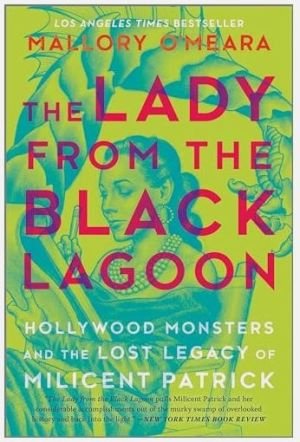
Mallory O’Mara loves the 1954 ‘Creature From The Black Lagoon’ film. I knew Milicent Patrick had created the Creature design a couple years ago from reading Tom Weaver’s ‘The Creature Chronicles’, which I reviewed here. O’Mara points out that she’s the only woman to have created a significant horror monster and the number of women in creative roles in the American film world are still very low. O’Mara also had problems finding out about Milicent and this book, in part, shows how she did her research here. The main discoveries comes at the end of the book where she finally meets Milicent’s relatives.
The first part of this book looks at Milicent’s parents, Camille and Elise Rossi, and it would be fair to say her father was both a structural engineer and misogynist and worked for a woman designer whom he didn’t like who worked on the William Randolph Hearst estate which was forever expanding.
Milicent Patrick was a second of three children and born as Mildred Elisabeth Fulvia Rossi. She later in life took the name ‘Milicent’ based on Hearst’s wife’s name who took a special interest in her. It was only when O’Mara visited the Hearst estate that she discovered that Milicent’s father was not liked and other employees were glad when he was fired. The big find there was Milicent had been interviewed and it had been recorded so she had the sound of her voice and the discovery Milicent had changed her name which explains the difficulty of tracking her down.
From art school, Milicent went to Disney working in animation on ‘Fantasia’, ‘Dumbo’ and ‘Bambi’ in her two years tenure there. Looking at the other jobs she did, Milicent used her looks to sell things before spending time as an extra for thirteen years in the film industry and got the valuable SAG union card. O’Mara has seen some footage from many of the films and TV shows she was in and doesn’t think she was a particularly good actor. As acting took a lot of waiting time, she spent that time drawing the actors around her. This attracted Bud Westmore to employ her as a make-up designer. O’Mara points out the difference in that Milicent designed but did not put make-up on actors and was the only woman in the department. Her first creature was for the film, ‘It Came From Outer Space’ with a remit to make the alien unworldly.
Her efforts on ‘Creature From The Black Lagoon’s design made Universal’s publicity department want to use her in promotional work. Despite keeping to the lines her boss, Bud Westmore, wanted, taking credit for her work, he still fired her. I tend to agree with O-Mara’s sentiments, the Westmore family wanted credit regardless and Bud was the worst of the lot. Although she still acted in films, all bit parts, Milicent then stuck to doing commissions of the key cast while working there.
Careers in America, especially Hollywood, rise and fall equally fast based on age and talent. Milicant’s was equally like that. The fact that she created three significant creatures, did I also include the Metaluna mutant in ‘This Island, Earth’? Not my favourite but more to how he was delivered in the film really but it’s still memorable. That’s three, clearly outnumbering the many men who’s created the other significant ‘monsters’ up to that time.
This is a nicely written book. The blend of different elements, looking at Milicent, her own life and career comparisons and research shouldn’t normally work but O’Mara succeeds as she sees similarities of her own involvement in the film industry as Milicent’s as there are very few women at the top. Her own language gets a little fruity occasionally but not obsessively.
Something this book illustrates is how O’Mara had to do her research with very little to go on initially, relying on her geek friends network, include Tom Weaver, and a few lucky breaks. This is all pre-Internet days but I suspect she would have had problems even then. A lot of the early films, including up to the late 1950s-early 1960s rarely had the full credits and it was years before Milicent Patrick was acknowledged for her work on the Creature, let alone the other designs she did on other films. The fact that three of them are still iconic today is a testimony to her work.
This is the only book in-depth about Milicent Patrick and, for the UK, an import. If you have an interest in who designed these creatures, should be on your reading list.
GF Willmetts
November 2026
(pub: Handover Square Press. 334 page lightly illustrated indexed medium enlarged paperback. Price: varies. ISBN: 978-1-335-01013-1)
check out website: www.harpercollins.com/products/the-lady-from-the-black-lagoon-mallory-omeara?variant=39308742295586



Join the conversation (0)