
Ryu Murakami, the Japanese novelist and film-maker whose books gave the world Coin Locker Babies, In the Miso Soup and Audition, has died at the age of 74. His long-time publisher Gentosha announced that he died at his home on 17 October, and that a private family funeral has already taken place. No cause of death has been given. “We are deeply saddened by the news of his untimely passing,” Gentosha said, describing him as a pioneering figure who kept publishing provocative work aimed at younger generations.
British readers of a certain age will remember the shelves of the late 1990s, when there were two Murakamis in the Japanese fiction section and you had to check which one you were picking up. Haruki gave you wells, cats and melancholy jazz. Ryu gave you something that might bite. The two were friends, and even published a book of conversations together, Walk, Don’t Run, in 1981, but there was never much doubt which of them would end up on a horror website.
Born in Sasebo, Nagasaki, in 1952, he grew up in a port town with a US naval base. That world of American servicemen, drugs and rock music runs through his debut, Almost Transparent Blue, which won the Gunzo Prize for new writers and then the Akutagawa Prize, Japan’s most prestigious literary award, in 1976. He was a student at the time, and the book’s account of sex and narcotics on the edge of an American airbase upset a good part of the literary establishment, which was probably the point.
For genre readers, though, the book that matters is Coin Locker Babies (1980). Two boys, Kiku and Hashi, are abandoned as newborns in railway-station coin lockers and grow up into a near-future Tokyo of toxic islands, glam-rock celebrity and a chemical weapon called datura that promises to bring the whole city down. It is cyberpunk before anyone had coined the word, with all the rage and none of the chrome. Hideo Kojima, the creator of Metal Gear Solid and Death Stranding, paid tribute on X with a photograph of his own copy: “This was my bible. R.I.P.” Anybody who has spent time with Kojima’s orphaned super-soldiers and doomed cities will see the family resemblance at once.
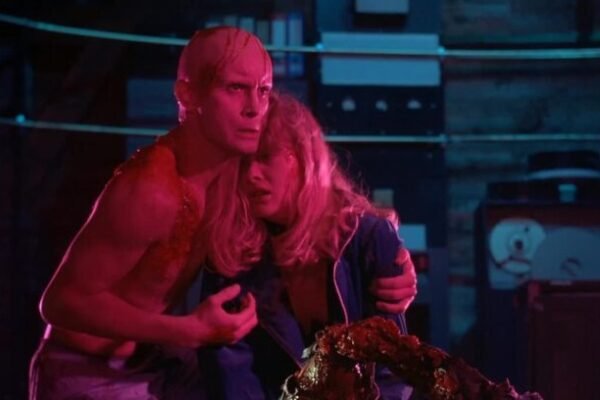
Then came the horror. Audition (1997) is the story of Aoyama, a lonely widower whose film-producer friend stages a fake casting call so that he can find a new wife, and of the quiet, perfect young woman who wins the part. In 1999 Takashi Miike filmed it, and the result became one of the films that put Japanese horror on the international map. Its first hour plays as a gentle romantic drama, which is precisely why the last half-hour has been making audiences leave cinemas, or faint in them, for a quarter of a century. Anybody who has seen it does not need reminding about the piano wire, and anybody who has not should probably go in knowing as little as possible. In the Miso Soup (1997), which won the Yomiuri Prize, sends a young Tokyo sex-industry guide around the city’s nightlife with an American tourist who becomes steadily more frightening, and Piercing (1994) was filmed in 2018 by Nicolas Pesce, with Christopher Abbott and Mia Wasikowska. Hideaki Anno, of Neon Genesis Evangelion, turned his novel Love & Pop into a live-action film.
He was a film-maker himself too, directing adaptations of his own work including Almost Transparent Blue and, most notoriously, Tokyo Decadence (Topaz, 1992). Later books kept edging into speculative territory. Parasites won the Tanizaki Prize in 2000, and From the Fatherland, with Love (2005) imagines a near-future Japan in which North Korean commandos seize the city of Fukuoka while the government dithers in Tokyo. It is a thriller with a satirical sting, and also a hefty one. All told, he published more than 40 novels, along with essays, short stories and a long-running television career as a talk-show host on Japanese business affairs, which is not something one could say of most horror novelists.
What runs through all of it is a sort of furious energy aimed at the comfortable surface of post-war Japan, and a refusal to look away from what lay beneath it. He wrote about the people the economic miracle left behind, and he was not polite about it. Many novelists are called provocative. Ryu Murakami’s books still provoke, half a century later. His English-language publishers have included Penguin and W.W. Norton, and the best place to start is still Coin Locker Babies, preferably not in a railway station.
Source: Gentosha’s announcement (in Japanese), with further reporting from Gizmodo, Bloody Disgusting and The Guardian.


Join the conversation (0)