
J. J. Pierce, the critic, fanzine editor and historian who spent the late 1960s defending traditional science fiction against the New Wave, has died. According to Darrell Schweitzer, a friend of more than fifty years, he died on Sunday 1 November. Schweitzer had the news from Pierce’s widow, Marcia, who said she had no further details. File 770 carried the report on 8 November, and so far that is the only notice we have seen, so treat the finer details as provisional until a formal obituary appears.
For a certain generation of fans, John Jeremy Pierce was the loyal opposition. From 1968 to 1974 he published the fanzine Renaissance. He was the driving spirit of the Second Foundation, the group of traditionalists whose battles the scholar Rob Latham later wrote up in an academic paper titled, gloriously, “Inside the New Wave Wars”. Around 1969 and 1970 he slugged it out with Harlan Ellison and Norman Spinrad in the letter column of Richard E. Geis’s Science Fiction Review. Nowadays a row like that would be over in an afternoon of social media posts. Back then it took months, postage stamps and a great many semicolons, and everyone involved seems to have enjoyed it enormously.
It would be a mistake to remember him only as the man shouting “get off my lawn” at Michael Moorcock’s lot. Pierce argued for a kind of science fiction he loved, and in the 1970s he did something practical about it. For Del Rey he edited The Best of Cordwainer Smith, The Best of Murray Leinster and The Best of Raymond Z. Gallun. The Cordwainer Smith volume in particular was how many readers first met the Instrumentality of Mankind, and Pierce went on writing about Smith for years. Plenty of critics only knock things down. Pierce also put a few things up.
In 1977 he was handed the editor’s chair at Galaxy, then in deep financial trouble. He lasted a little over a year and later wrote up the experience under the title Thirteen Months of Torment, which may be the most honest title any magazine editor has ever chosen. Galaxy had folded by 1980. As a magazine that has been online since 1991, SFcrowsnest can only say that keeping a genre title alive is a noble calling and a terrible business, and that Pierce got the worst of it.
His bigger legacy is on the bookshelf. Between 1987 and 1994 he published a four-volume critical history of science fiction under the general title A Study in Imagination and Evolution. Rather than marching through the decades, it organised the genre by ideas and drew parallels with biological evolution. He wrote for The New York Review of Science Fiction and Science Fiction Studies, and he also wrote cheerfully about Twin Peaks and The X-Files for the fanzines Wrapped in Plastic and Spectrum. His day job was editing trade magazines, among them Quick Frozen Foods International. Andrew Porter, who worked with him there in the late 1960s, remembers “a subtle, caustic wit” and calls him “definitely a sercon fan”. That is fandom’s term for the serious and constructive sort. Frozen peas by day and the future of the human imagination by night is a very fannish career path.

Then there is the family connection, which in any other field would be the headline. His father was John R. Pierce of Bell Labs. He supervised the team that built the first transistor and, at Walter Brattain’s request, came up with its name. He played a leading part in Telstar 1, the first commercial communications satellite, and Arthur C. Clarke called him one of the two fathers of the communications satellite. On the side, he wrote science fiction under the pen name J. J. Coupling, an electrical engineer’s pun. So the father put television into orbit and invented the vocabulary of the electronic age, and the son spent his life arguing, with great energy, about what science fiction ought to be for. Plenty of SF dynasties have had less to talk about over Sunday lunch.
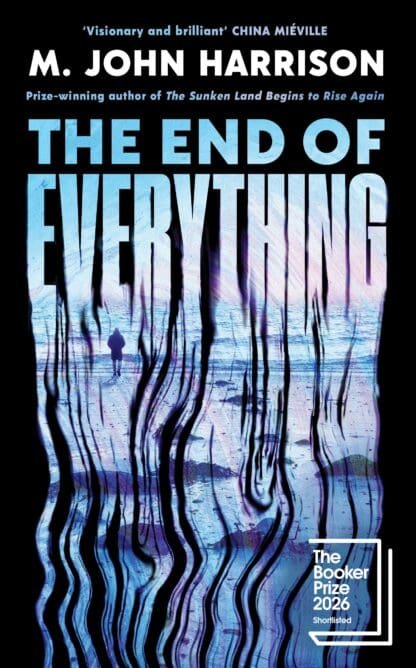
The timing is cruel, and rather apt. Eight days after Pierce died, M John Harrison won the Booker Prize. From 1969 Harrison ran the book pages at New Worlds, the very magazine at the centre of the New Wave that Pierce spent his youth opposing. Pierce would surely have had something to say about that, at length and with footnotes, and it would have been worth reading. Our condolences go to Marcia and to all his friends.
Sources: File 770; John J. Pierce and John R. Pierce on Wikipedia.

Join the conversation (0)