
There are many ways to get a Fantasycon audience muttering into its real ale. Getting the date of the next Worldcon wrong is one. Announcing that you are working with artificial intelligence is apparently another. According to the November issue of David Langford’s Ansible, Peter F. Hamilton, one of this year’s guests of honour at Fantasycon in Glasgow, “chilled the blood of at least some members of his Fantasycon audience by announcing his partnership with an outfit that generates films from books ‘using AI and other technology’.”
Details are scarce. A blog report of the convention from At Boundary’s Edge says that Hamilton “happily” announced he was “partnering with an AI firm to adapt one of his novels into animation”, and that the backlash online was louder than the reaction in the room, which it puts down to British politeness. Neither source names the company or the book, and SFcrowsnest has found no public announcement of either. Until the firm and the novel are named, it’s impossible to say what “AI and other technology” means here: an AI-generated film, a conventional animation using AI tools somewhere in the pipeline, or something in between.
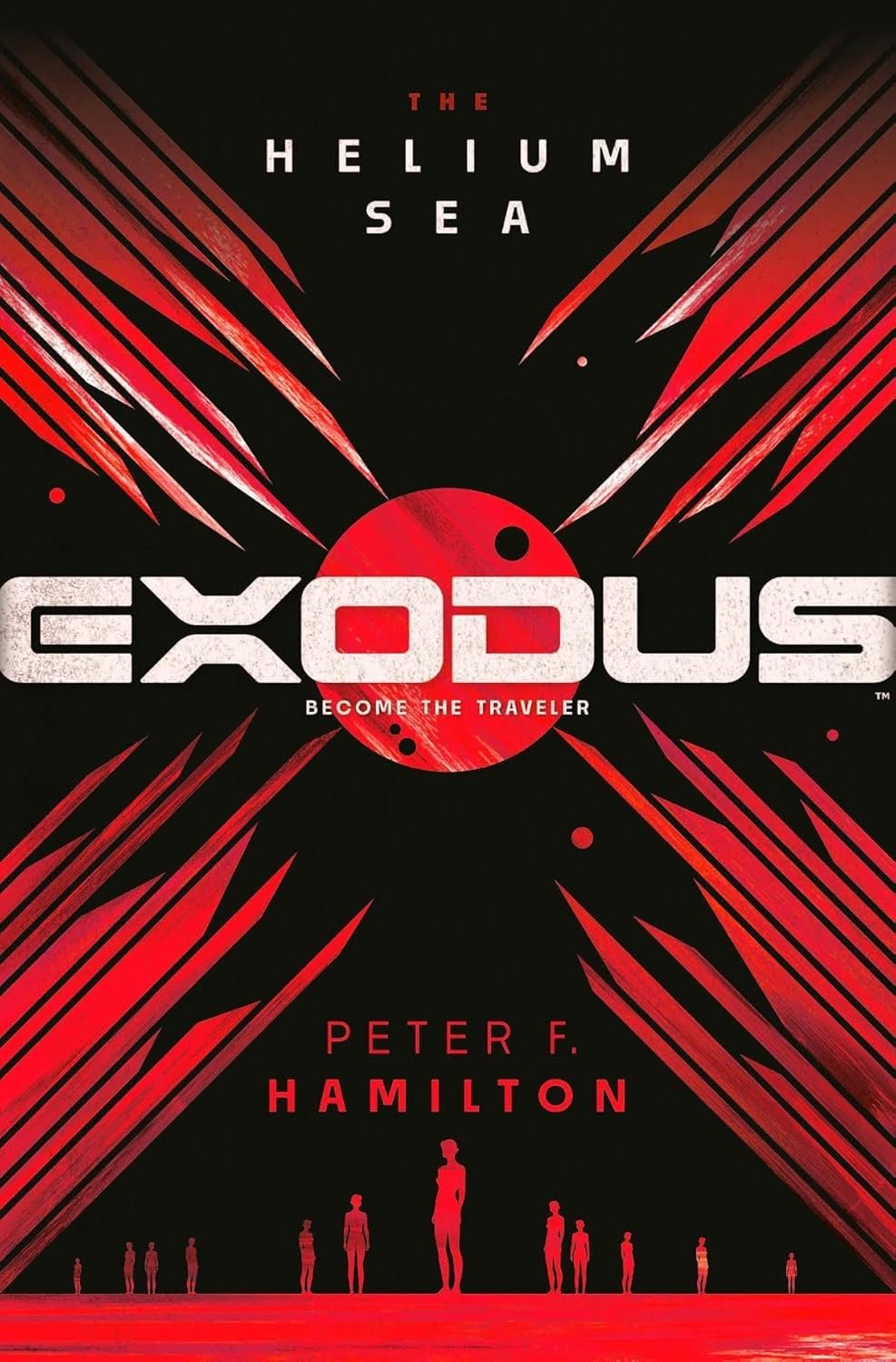
It’s easy to see why the idea would appeal to Hamilton. His novels are among the least filmable things in British SF. The Night’s Dawn trilogy runs to well over 3,000 pages and features living starships, possessed colonists and a crisis that spreads across an entire interstellar civilisation. A full live-action adaptation would cost roughly the GDP of a small planet. If new technology could get his universes onto the screen at a fraction of the price, it’s not hard to see why an author would be tempted. Hamilton is also no stranger to other media: he wrote the universe behind Exodus, the science fiction RPG from Archetype Entertainment.
It’s just as easy to see why the room went quiet. Generative AI is the most heated argument in genre publishing right now. Writers and artists object to models trained on their work without permission or payment, and illustrators and animators fear for their jobs. Many conventions, awards and magazines have moved to ban AI-generated work outright, and earlier this week fans were arguing about an AI recreation of the late Elisabeth Sladen in a Doctor Who fan film. Announcing an AI partnership to a hall full of writers, artists and readers was always going to get a reaction, however politely it was expressed.
There’s an irony here that a science fiction convention can hardly miss. The genre has been warning about synthetic art for longer than most of the people in that Glasgow audience have been alive, from the machines that write popular novels in Orwell’s Nineteen Eighty-Four to Roald Dahl’s “The Great Automatic Grammatizator”, in which a machine churns out bestsellers and puts human authors out of work. Hamilton’s own fiction is full of artificial minds of uncertain loyalty, which might explain why his readers are a little nervous about letting one loose on his books.
The fair thing to do is wait and see. When the company and the novel are named, readers will be able to judge for themselves what is being made, how and by whom. Until then, the most that can be said is that one of Britain’s best-selling SF authors has made a bet on the technology that the rest of his profession is busy arguing about. If it works, he’ll look like a visionary. If it doesn’t, he’ll have the material for a very good cautionary novel.
Join the conversation (0)