

New York Comic Con turned twenty this weekend, celebrating with a Coney Island theme at the Javits Center, which is apt: four days of rides, queues and things on sticks that are bad for you. Judging by the trending lists, most of the genre world spent Saturday hitting refresh on Manhattan panel feeds, so this week’s round-up is heavy on convention news, with a detour to the South Bank, a stop in Yokohama and one brief, unavoidable visit to Hell.
Kishimoto picks up the brush again
Of everything announced in New York, nothing set the internet’s hair on fire quite like the final slide of Saturday’s “NARUTO: What’s Next?” panel, held, with the sort of timing marketing departments dream about, on Naruto Uzumaki’s birthday. Masashi Kishimoto is returning with Naruto: Shadow Rising, a new manga carrying his own artwork. That matters more than it might sound. Kishimoto has spent much of the past decade writing (Samurai 8, the later Boruto volumes) while other hands held the pen, so this is the first new Naruto series from his drawing board in more than ten years.
Hard details are scarce. The title is confirmed, some sketches were shown, and early reports place the story in the years after the Fourth Great Ninja War, while Kakashi is wearing the Hokage’s hat and before Naruto inherits it. That gap has been filled by fan fiction of wildly varying quality for the best part of a decade, so the original author arriving to sort it out is a little like Tolkien turning up at a fan convention to settle the Tom Bombadil question. No publication date has been set; Shueisha is holding the specifics back for Jump Festa ’27 at Makuhari Messe on 19 and 20 December.
The panel had other cards to play. Naruto×Ninkū is a four-episode crossover anime with Koji Kiriyama’s 1990s ninja manga Ninku, directed by Noriyuki Abe, with Kishimoto explaining in a message that he created Naruto because he wanted to see where Ninku went next. He also described its hero Fūsuke as “Naruto’s secret mentor”, a revelation that will send a certain sort of fan back to their 1995 back issues with a highlighter pen. Naruto Mobile, a hit in mainland China since 2016, is heading worldwide in 2027, and all of it sits under a three-year “Project Rasengan” roadmap. Meanwhile Destin Daniel Cretton’s live-action film for Lionsgate is still out there looking for its Team 7. Nobody envies whoever has to make Sasuke’s hair obey the laws of physics.
Ray Gunn finally fires
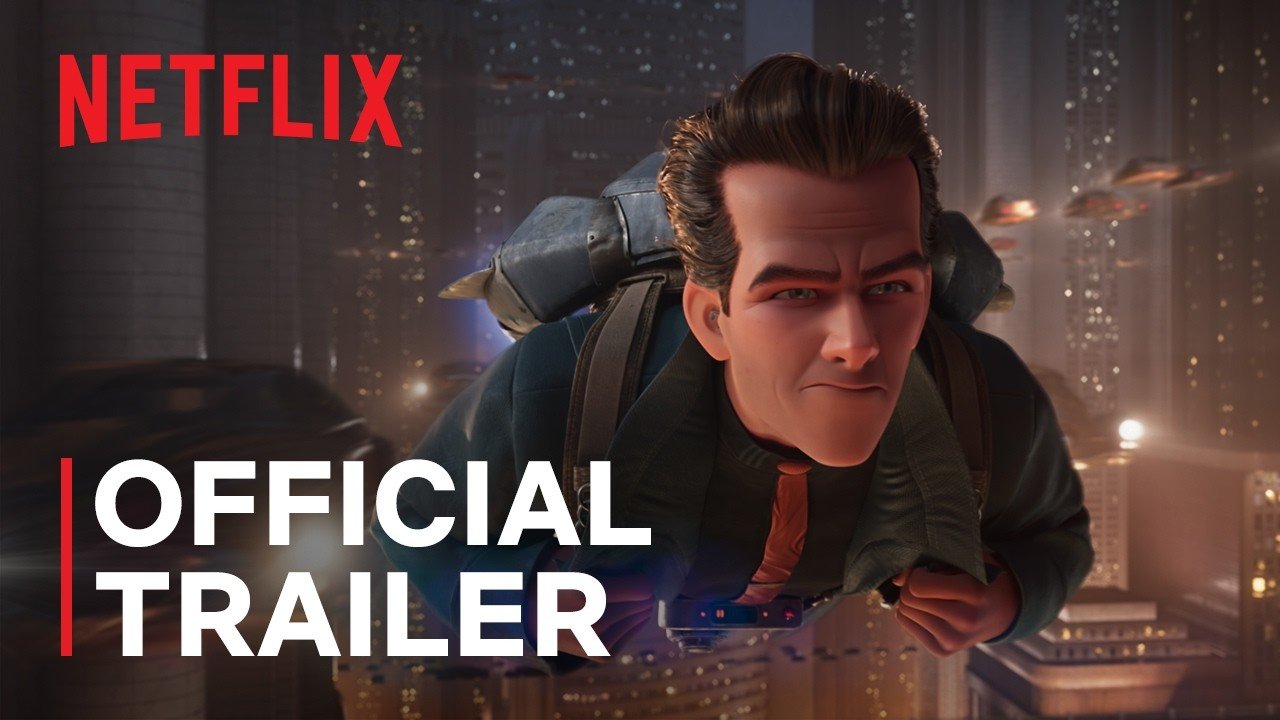
Brad Bird’s Ray Gunn has been “nearly happening” for so long (Turner Feature Animation in the 1990s, then the Iron Giant years, Pixar, Tomorrowland, and an Apple deal that reportedly walked away partly over the budget) that it had acquired the aura of a cult classic nobody had actually seen. On Saturday that changed, with a world premiere at the BFI London Film Festival in the Royal Festival Hall, Bird, Michael Giacchino, Scarlett Johansson and Sam Rockwell all in attendance.
The setting is Metropia, a vast city in an alternate future as imagined from 1939, which is to say the future of Things to Come and the World’s Fair rather than the one we actually got. Rockwell voices Raymond Gunn, a struggling private eye drawn into a case involving aliens, murder and a multimedia star called Venus Nova (Johansson). Tom Waits plays his cyclopean sidekick, Eyera, the kind of casting that makes you wonder why nobody thought of it in 1986.
The critical temperature is warm rather than molten. The first fifteen or so reviews put it on 93% at Rotten Tomatoes, settling nearer 90% as more critics filed, with an average rating that suggests “very good” more often than “masterpiece”. Peter Bradshaw at the Guardian gave it five stars; Angie Han at The Hollywood Reporter found it not especially special. The broad consensus is that the world-building and design are extraordinary, while opinion divides on whether the story and characters keep pace. It opens in select US cinemas on 4 December, some in 70mm, before reaching Netflix on 18 December. Bird, who has campaigned for a proper theatrical run with all the success of a man arguing with a vending machine, has advised viewers to find the biggest screen they can, even if that means barging into a neighbour’s front room. This column endorses the plan, provided you bring biscuits.
Dial it again, Sam
The Stargate is spinning up once more. Amazon MGM has handed a new series to Jac Schaeffer, creator of WandaVision and Agatha All Along, as part of her overall deal with the studio, with a writers’ room due to open shortly and Joby Harold and Tory Tunnell of Safehouse Pictures executive producing. That’s all there is: no title, no cast, no hint of whether SG-1’s descendants will be anywhere near it. It is also the second attempt this year. A version from franchise veteran Martin Gero, greenlit last November, was scrapped in June after executives reportedly worried it would not reach beyond the existing fanbase, which is a remarkable reason to cancel a show in an industry that runs almost entirely on existing fanbases.
Fans are, predictably, split. One camp points out that Schaeffer made a mainstream audience sit through black-and-white sitcom pastiche and like it, which is no small trick. The other camp spent ten seasons with Jack O’Neill and would quite like the people who know what a Goa’uld is to stay in charge, thank you. Nobody has had new Stargate on television since Stargate Universe was switched off mid-cliffhanger in 2011, so the gate has been sitting in the basement gathering dust for fifteen years. Whatever comes through it next, one hopes somebody remembers that the show’s secret weapon was always the jokes.
Blumhouse brings home the videotapes
BlumFest returned to the Empire Stage on Friday night, sharing the bill with Violent Night 2, and its firmest new announcement was a live-action Amanda the Adventurer. DreadXP and MANGLEDmaw Games’ puzzle-horror trilogy follows Riley Park, who inherits a late aunt’s house and finds a stack of VHS tapes of a homemade early-2000s children’s programme, presented by a little girl called Amanda and a shy sheep named Wooly, who become increasingly, unsettlingly aware of the person watching. Matthew “MatPat” Patrick, formerly of Game Theory, is producing with Epic Pictures as the first project under a multi-film deal. After Five Nights at Freddy’s, “mascot horror” is evidently now a career path. Anyone raised on Play School and the dead-eyed stare of Hamble the doll will find the premise less fiction than documentary.
Trending alongside it is Something Is Killing the Children, though readers keeping score will note that Blumhouse’s deal for James Tynion IV and Werther Dell’Edera’s monster-hunting comic was announced last October: a live-action feature produced by BOOM!’s Stephen Christy and Tynion, plus an adult animated series that Tynion will adapt himself. No director, cast or release date has surfaced, although production listings point to pre-production in the latter half of this year. That is still further than Erica Slaughter got at Netflix a few years back, when Mike Flanagan and Trevor Macy were developing her as a series. Which brings us neatly to Flanagan’s current day job.
Carrie goes to the prom again
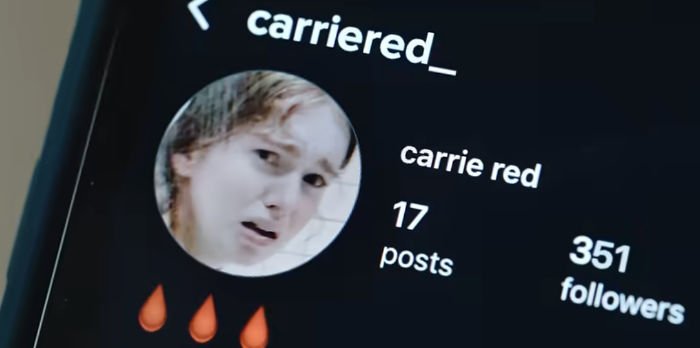
Flanagan’s first show for Prime Video since leaving Netflix, an eight-episode Carrie, dropped in one go on 7 October, fifty years after Brian De Palma’s film turned Sissy Spacek and a bucket of pig’s blood into horror iconography. Summer H. Howell plays Carrie White, Samantha Sloyan is her mother Margaret, Matthew Lillard is the principal, and the usual Flanagan repertory company (Kate Siegel and Rahul Kohli among them) turn up as reliably as the ghosts in his previous shows. The update is modern, swapping the locker room for viral bullying and social media, and Flanagan was sufficiently aware of the “why bother?” question that reviewers received a three-page note from him titled, of course, “Why?”. It’s either admirable candour or the first time a showrunner has pre-emptively answered the letters page.
It seems to have worked, mostly. With more than eighty reviews counted, Carrie sits in the mid-80s on Rotten Tomatoes, the best-reviewed screen Carrie since 1976 and also, by a whisker, the lowest-rated of Flanagan’s television series. Howell and Sloyan are drawing the warmest praise. The grumbles centre on the ending and on Flanagan reviving an idea from King’s novel that every previous adaptation quietly dropped: that Carrie may not be the only telekinetic girl out there. One review has already floated the possibility of a trilogy, which sounds suspiciously like a franchise being stretched on the rack. Still, there is something reassuring about a world in which the worst-reviewed Mike Flanagan show is better reviewed than most television.
Pinhead divides the room
Doug Bradley last wore the pins in Hellraiser: Hellworld in 2005, a sequel even a Cenobite might struggle to enjoy. Twenty-odd years later he is back, voicing Pinhead in Clive Barker’s Hellraiser: Revival, Saber Interactive and Boss Team Games’ first-person, single-player survival horror, released on 8 October for PC, PS5, Xbox Series and Switch 2. Players take the role of Aidan, who must master the Genesis Configuration to drag his girlfriend back out of Hell, with Barker himself credited with helping to shape the story.
The critics cannot agree whether it is pleasure or pain. Insider Gaming gave it nine out of ten; Game Informer gave it 4.5. Metacritic averages sit at 69 on PS5 and 74 on PC and Xbox, with the positive camp praising the atmosphere, sound design and Bradley’s performance, and the negative camp citing technical wobbles and clunky progression. Steam players, meanwhile, have voted more than 96% positive, which is the kind of gap that usually means the audience is getting precisely what it came for and is prepared to forgive the rest. The game was also pulled from the German Steam store while awaiting its age rating, so at least one corner of Europe is treating it with the seriousness the puzzle box deserves. A divided reception feels oddly fitting for a franchise that began as a low-budget British horror film shot in an ordinary north London house and has been splitting audiences down the middle ever since.
Astarion takes the case
For the tabletop crowd, Dark Horse used NYCC to unveil its ongoing Baldur’s Gate 3 comic, which will rotate its starring companion every six to twelve issues. Astarion leads the first arc, issues one to six, written by Alyssa Wong (Doctor Aphra) with pencils by Vincenzo Carratù: freshly free of Cazador, the vampire spawn finds Waterdeep gripped by a spree of gruesome ritual murders and has to catch the killer before he becomes the next victim. A detective story starring the least trustworthy man in the Forgotten Realms is a promising angle. Karlach then takes over for issues seven to eighteen, a trip into the Nine Hells from Becky Cloonan and artist Francesco Scimonelli, with Wyll, Shadowheart, Gale and Lae’zel promised later. Issue one arrives on 24 February 2027 at $4.99, with a preview in Dungeons & Dragons #2 on 6 January. One of the five covers is a blank “character creation” variant, presumably so you can draw your own Tav, roll badly on your Art check, and blame the dice.
A long time ago, on Earth-616
Anchoring the comics chatter this weekend is Star Wars | Marvel: Hope Assembles, the first official crossover between the two, announced back in August and still trending. Kevin Smith (who once made a generation worry about the independent contractors working on the second Death Star) writes, with art by David Marquez across five issues running monthly from January to May 2027, timed to land for the fiftieth anniversary of A New Hope. The premise has a reality-shattering spell dropping the events of the 1977 film into Marvel’s main Earth-616 continuity, so this is no What If…? sidebar: Luke, Leia and Han will be crossing paths with the Avengers, Spider-Man, the X-Men and the Fantastic Four, with Doctor Doom and Darth Vader presumably comparing armour suppliers. Smith says he grew up wishing Spider-Man or Doom could wander into the films. Older readers will recall that Marvel’s own 1977 Star Wars comic already gave us Jaxxon, a six-foot green rabbit with a blaster, so the house has form when it comes to crossing streams.
Anime in brief
Away from New York, the STONE FES. 2026 event in Yokohama on Saturday confirmed that Dr. Stone: Terraforming is in production. It adapts the post-finale story collected in the manga’s 27th and final volume, picking up after Dr. Stone: Science Future wrapped the main anime in June. Senku has already rebuilt human civilisation from the Stone Age to the space race; the title rather suggests that one planet is no longer enough for him.
And for anyone with a soft spot for dungeon towers and time loops, SSS-Class Revival Hunter reaches Crunchyroll in January 2027 across most territories outside Asia. Adapted from Sinnoa’s Korean web novel and its webtoon, it follows Gongja Kim (Takeo Otsuka), a lowly F-rank Hunter whose rare and rather inconvenient skill only activates when he dies, with Satoshi Hino as the ghostly Sword Emperor. Hiroaki Sakurai, of The Disastrous Life of Saiki K., directs at STUDIO fu. Think Groundhog Day with a great many more monsters and considerably less Bill Murray.
So that was NYCC at twenty: a new Naruto, an old Pinhead, a Stargate on its second dial-up of the year and Darth Vader loose on Earth-616. Somewhere on the show floor, one likes to imagine, a man in a homemade Cenobite costume was patiently queueing for the Sesame Street table read. After two decades, the convention still contains multitudes.

Join the conversation (0)