

Considering how many comic book artists regarded Hal Foster (1892–1982) as a major influence on their art, when I came across this book, ‘Hal Foster: Prince of Illustrators’, it seemed like a good opportunity to learn more about him and how little I really knew. His famous creation, Prince Valiant, appeared in 350 newspapers in America, which would explain why we didn’t see it in the UK, although I had seen the 1954 film a few years back.
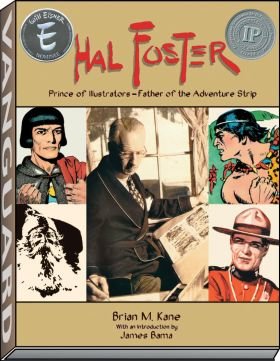
He was a Canadian from a poor family and had to leave school early to help support his family. That didn’t stop him learning, and the library was his second home. Like his brothers, he could live off the land and bring wild ducks and rabbits home to feed them. He was also heavily into all sports, which means there was an artist preceding Frazetta with that bent. Foster also had various jobs, including art, and finally got his break doing art for women’s underwear catalogues. Due to a two-month layoff each year, Foster needed to acquire additional sources of income, which led him to work for Edgar Rice Burroughs on ‘Tarzan Of The Apes’, where he was regarded as the best artist ERB had ever seen. He was also reluctant to let Foster go when he expressed a desire to draw and write his character.
Rather interestingly, Foster didn’t come up with the name ‘Prince Valiant’; as editor, Joe Connolly came up with it as an alternative to the name he had, ‘Prince Arn’. Although Foster incorporated elements of King Arthur mythology, he also advanced the story and styled it to reflect the 14th century, creating a unique combination of historical and mythical themes that appealed to a wide audience. He was also the first creator to marry his creation off and give them a child, which didn’t mar Valiant’s success.
The number of artists influenced by Foster’s art is significant and enduring. Even Will Eisner was an admirer, and Kirby based the Demon’s face on a mask Foster created, hence the fish gills.
Seeing the artwork here, you have to admire Foster’s talent, and he worked on “Prince Valiant” for 30 years, including writing, inking with a brush, lettering, and colouring it before arthritis crept in and he had to bring in another artist. Reading the scale he drew his panels on explains how he got so much detail in without eye strain. Foster and his wife, Helen, were frequent travellers, often going to the places he would incorporate into the strip.
Foster also created various card-comedy gags, demonstrating his versatility.
From my analytical perspective, based off how he did his research, Foster had to be a geek for the way he soaked up all his knowledge. The influence he had on American artists who included their thoughts here clearly showed how much respect they had for him.
I’m now better informed about Harold Rudolf Foster, and so will you be if you buy this book.
GF Willmetts
March 2026
(pub: Vanguard, 2010 originally published 2001. 208 page illustrated large softcover. Price: varies. ISBN: 978-1-88759-125-6).


Join the conversation (0)