
Neuromancer finally hacks the streams (trailer).
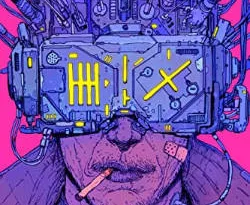
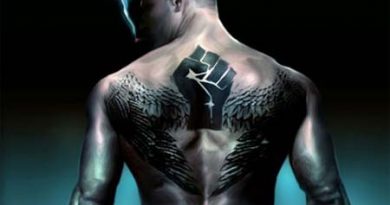
Apple TV has released the first teaser for Neuromancer, its adaptation of William Gibson’s 1984 cyberpunk landmark. At last, television is ready to introduce audiences to the novel that much of modern science fiction has been quietly photocopying for four decades.
Callum Turner stars as Case, a talented computer hacker whose nervous system has been damaged, leaving him unable to enter cyberspace. For Case, this is rather worse than losing the office Wi-Fi password. Jacking into the matrix was his profession, his addiction and the one place where he felt properly alive. Without it, he has been reduced to drifting through the bars and criminal markets of Chiba City, waiting for either a miracle or somebody unpleasant with a job offer.
Naturally, he gets both.
Case is recruited by the mysterious Armitage, played by Mark Strong, whose casting immediately tells us that the employment contract may contain several clauses concerning betrayal, coercion and sudden death. Armitage offers to repair Case’s damaged nervous system in exchange for his services on an ambitious digital heist. This is the cyberpunk equivalent of somebody offering to mend your knees provided you first burgle the Bank of England while dressed as a toaster.
Joining Case is Molly, played by Briana Middleton, a professional bodyguard and assassin with implanted mirrored lenses, enhanced reflexes and retractable blades beneath her fingernails. Molly is commonly described as a “razor girl”, which sounds like a rejected brand of shaving equipment until she removes somebody’s spleen during a business meeting.
Together, Case and Molly are drawn into a scheme involving artificial intelligence, corporate dynasties and some extremely wealthy people who have long since stopped regarding ordinary human mortality as applicable to them. It is an adventure involving cyberspace, orbital habitats, data theft, organised crime and the enduring science-fiction principle that rich families become considerably stranger once they can afford their own space station.
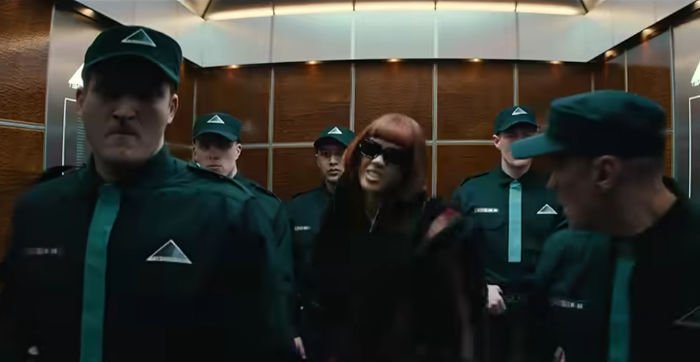
The teaser gives us Turner looking battered and thoughtful amid a near-future Chiba City packed with neon signs, crowded streets and technology that has been repaired too many times by somebody’s cousin. It is a world where towering corporate wealth exists beside hustlers, addicts and mercenaries living from one dubious transaction to the next. High technology has not abolished poverty. It has merely supplied poverty with better lighting.
This is precisely the territory Gibson helped define. Neuromancer did not invent every ingredient of cyberpunk, but it combined hackers, artificial intelligence, corporate power, body modification and urban decay into something sharp enough to carve its initials into the genre. It also popularised “cyberspace” and gave readers the matrix years before Keanu Reeves was offered a suspicious choice of confectionery.
The novel won the Hugo, Nebula and Philip K. Dick awards, becoming the opening volume of Gibson’s Sprawl trilogy alongside Count Zero and Mona Lisa Overdrive. Its influence can be found throughout later science fiction, from Japanese animation and role-playing games to films in which rain, neon and trench coats are used as substitute planning permission.
That influence creates an awkward problem for Apple’s adaptation. Neuromancer was startlingly original in 1984, but audiences have now spent forty years watching its descendants. The television series must somehow present Gibson’s ideas without appearing to imitate the films, games and programmes that imitated Gibson first.
It is a little like finally adapting the recipe for bread after everyone has already opened a sandwich shop.
The solution may lie in resisting the urge to treat Neuromancer as merely another polished neon action thriller. Gibson’s world is not sleek. It is grubby, narcotic and frequently confusing. Its technology is powerful but unreliable, and the people using it are seldom glamorous enough to appear in advertisements. Case is not a heroic computer genius saving civilisation from a safe basement. He is damaged, desperate and constantly discovering that the people employing him have installed another metaphorical explosive device beneath his chair.
Apple has assembled a substantial cast around Turner and Middleton. Mark Strong plays Armitage, while Joseph Lee, Peter Sarsgaard and Clémence Poésy appear among the corporate operators, artificial personalities and other citizens of the Gibsonian future who are unlikely to offer Case a straightforward answer when an ominous half-truth will do.
Graham Roland, whose credits include Dark Winds and Tom Clancy’s Jack Ryan, serves as showrunner. JD Dillard directs the first three episodes, and Gibson himself is among the executive producers. The ten-episode structure should give the story room to breathe, although breathing in Chiba City presumably requires a subscription and acceptance of seventeen pages of corporate terms.
Here at SFcrowsnest, we have been waiting a long time to see Neuromancer receive a serious screen adaptation. Several proposed film versions have entered development over the years, only to vanish into Hollywood’s own form of cyberspace, a mysterious realm where scripts, directors and several million dollars can disappear without leaving an error message.
Apple now appears to have succeeded where those earlier attempts failed. The teaser is brief, but it offers the right combination of speed, menace and sensory overload. There are weapons, crowded cityscapes and worried-looking people being told that purpose is everything. This is rarely reassuring when spoken by Mark Strong.
The larger question is whether the series can capture the strange, fractured intensity of Gibson’s prose. Neuromancer does not politely explain its world before beginning the story. It drops the reader into the deep end, sells the ladder to a multinational corporation and charges admission to anybody attempting a rescue.
Done properly, the television adaptation should feel equally dangerous. Viewers may not understand every piece of technology, every corporate relationship or precisely what the artificial intelligences are planning. Neither does Case, and he is the fellow being paid to survive it.
Neuromancer premieres globally on Apple TV on 22 January 2027 with two episodes, followed by a new instalment each Friday. Please keep your antivirus software updated, avoid accepting mysterious neural repairs from strangers and never trust an artificial intelligence that claims it merely wants to help.