
There are film titles that whisper. There are film titles that tease. And then there is Teenage Sex and Death at Camp Miasma, which kicks open the VHS rental shop door wearing blood-stained shorts and asks whether anyone has seen its emotional support machete.
Jane Schoenbrun’s new horror film now has a trailer, and it looks like the sort of slasher revival that has not so much been rebooted as exhumed, kissed, interrogated, therapised, and then chased round a lake by something deeply unhappy in a mask. It stars Hannah Einbinder as Kris, a young queer filmmaker hired to direct a new instalment of the long-running Camp Miasma franchise, a series which appears to have spent years doing what old horror properties do best: producing increasingly grubby sequels until only die-hard fans, copyright lawyers, and one very sweaty convention panel still care.
The twist, because horror loves a twist almost as much as it loves teenagers ignoring sensible advice, is that Kris becomes fixated on casting Billy Preston, the reclusive actress who played the final girl in the original film. Billy is played by Gillian Anderson, which immediately raises the stakes from “cult horror sequel” to “entire internet quietly rearranges its schedule”. When Kris and Billy begin working together, the whole thing slides into what the official blurb politely calls psychosexual mania. That phrase, incidentally, is how you know you are no longer in the safe paddling pool of horror cinema. You are in the deep end, and something under the water has unionised.
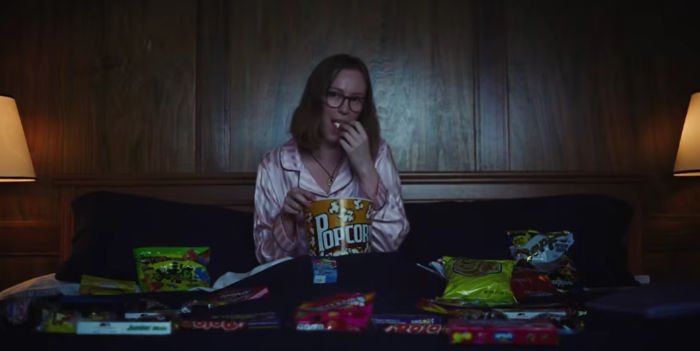
Schoenbrun has described the film as an attempt at the “sleepover classic”, which is a wonderful phrase because it suggests popcorn, torchlight, illicit giggling after midnight, and at least one person insisting they are not scared while visibly merging with the sofa. Anyone who saw We’re All Going to the World’s Fair or I Saw the TV Glow will know that Schoenbrun is less interested in easy scares than in the haunted wiring between identity, media, longing, memory, and the particular teenage horror of realising that the thing on screen may understand you better than the people in your house.
Teenage Sex and Death at Camp Miasma looks like that same obsession dressed in slasher drag, with the old campfire staples present and incorrect. There is a cursed franchise. There is an original final girl. There is a returning monster called Little Death, which may be the most aggressively loaded villain name since horror discovered chainsaws and repression. There are woods, water, blood, desire, nostalgia, shame, and the unmistakable scent of an old VHS tape that has been sitting too close to a radiator since 1988.
What makes this more interesting than another weary IP resurrection is that the film seems to know exactly how grubby the slasher tradition can be, and also how beloved. Classic camp slashers have always been weird moral machines: teenagers arrive, teenagers snog, teenagers drink, teenagers make poor decisions involving moonlit cabins, and then the film punishes them with farm tools. The genre’s relationship with sex, gender, queerness, and bodies has often been about as delicate as a bear trap in a sock drawer. Schoenbrun appears to be walking straight into that mess with a lantern, a camera, and a very sharp set of questions.
This is not merely “what if Friday the 13th, but clever?” That would be too easy, and frankly too Netflix algorithm. This appears to be more in the realm of “what if the slasher film looked back at the people who loved it, harmed them, thrilled them, shaped them, embarrassed them, and then asked for one final take?” It is meta-horror, yes, but hopefully not the sort where everyone spends two hours explaining tropes while the audience silently begs for an axe to arrive and restore order.
Hannah Einbinder seems well cast as a filmmaker caught between fandom and possession, between wanting to fix the old monster and wanting to be devoured by it. Gillian Anderson, meanwhile, as the ageing and mysterious final girl, is the sort of casting that makes genre fans behave like Victorian spiritualists detecting a knock under the table. The final girl is one of horror’s most durable figures: survivor, witness, avenger, trauma archive, and sometimes the only person in the film with the basic good sense to run in a straight line. Putting Anderson in that role, then making her the centre of someone else’s obsession, feels pleasingly dangerous.
The film has already come out of Cannes carrying excellent notices and the Queer Palm, which is not bad for something whose title sounds like three separate sections of a 1980s video shop accidentally collapsing into one another. Critics seem to have responded to its blend of horror, satire, queer longing, and genre archaeology. This may therefore be one of those rare cinematic beasts: a film with enough gore for the midnight crowd, enough theory for the people who underline things in festival catalogues, and enough Gillian Anderson to cause a measurable disturbance in the social media weather system.
Here at SFcrowsnest, we retain a soft spot for horror that remembers the genre is not just about who dies, but why we cannot stop watching. The best slashers are campfire myths with better lighting: stories about bodies, rules, fear, punishment, transformation, and the terrible knowledge that going into the woods is almost always a mistake. Teenage Sex and Death at Camp Miasma looks as if it has read the old rulebook, kissed it on the forehead, and fed it to the lake.
The trailer suggests something funny, strange, horny, melancholy, bloody, and perhaps even oddly cosy, in the way only a good horror film can be cosy. That is the magic of the sleepover classic. It terrifies you, then lets you laugh, then sends you home changed, carrying the private suspicion that the monster was never entirely the problem.
Teenage Sex and Death at Camp Miasma arrives in cinemas from 7th August 2026. Bring snacks, bring friends, and do not accept a summer camp brochure from anyone whose eyes keep drifting towards the lake.

Join the conversation (0)