

The Mind Parasites by Colin Wilson (book review).
Writer Colin Wilson (1931-2013) has the distinction of being acknowledged in the introduction to A.E. van Vogt’s novel The Pawns Of Null-A, where van Vogt specifically references Wilson’s own novel, The Mind Parasites, particularly its ideas concerning integrated personalities, a recurring theme in the Null-A books. As I had never read The Mind Parasites, I decided it was time to remedy that omission. Interestingly, in his own introduction, Wilson also acknowledges van Vogt as a friend. He further explains that his primary influence in writing The Mind Parasites was H.P. Lovecraft, blending cosmic horror with a touch of science fiction. Considering the novel’s use of ESP and expanded consciousness, it would be surprising if van Vogt had not exerted at least some influence as well.
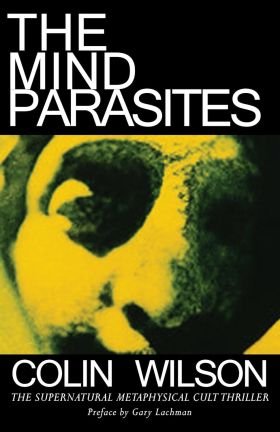
I had read somewhere that this book was constructed as a collage of different perspectives, newspaper clippings and assorted documents, but that is not really the case here. There are occasional references to fictional books and academic notes, which is only natural given the highly educated first-person narrator. The genuinely odd thing is that, across its 192 pages, there are no chapter divisions at all.
Dr Gilbert Austin is summoned after his friend Karel Weissman commits suicide. Austin is not a medical doctor but more of an archaeologist-psychologist polymath with an interest in almost everything. In many respects, he resembles Wilson himself. The boundaries of Austin’s expertise remain somewhat vague throughout the novel. There is also considerable discussion about why people commit suicide and why Weissman, in particular, should not have been among them.
The last Wilson book I read was his superb non-fiction work Supernature, which remains well worth reading even today. When Wilson switches to fiction, he still cannot resist using his characters as vehicles to impart ideas and theories, sometimes at the expense of narrative momentum. The “mind parasites” of the title are essentially psychic vampires who drive some people towards suicide.
As a writer myself, I recognise the signs when an author throws everything, including the kitchen sink, into a story, especially ideas and influences that fascinate them personally. When Austin and Reich suddenly develop telekinesis and then begin teaching it to trusted allies who have not been infected by the mind parasites, the novel takes an unexpectedly strange turn. I mean, can you move objects with your mind? More importantly, do you think such a skill could genuinely be taught?
Wilson writes the novel in the first person and in the past tense. Granted, this was very much the style of Lovecraft, whom Wilson openly admired, but it also drains some suspense from events because you know Austin survives long enough to recount them. There are also some abrupt leaps in development. One moment the protagonists are operating as a secretive little group and, seemingly the next, they are surrounded by the media and eating breakfast at the White House. If something like this happened today, or even in the 1970s when Wilson wrote the novel, would it not strike you as at least slightly far-fetched?
Wilson’s handling of suicide statistics also raises questions. Every section of society experiences suicides on a regular basis, tragic though they always are. You would need a very significant increase before most people would regard it as extraordinary. To use a modern British example, the agricultural industry has sadly suffered notable suicide rates in recent years, but even then the percentage remains comparatively small overall. In The Mind Parasites, Wilson focuses heavily on scientists taking their own lives, which suggests the psychic parasites are highly selective in their victims. For parasites, however, killing the host is usually self-defeating.
Without venturing too deeply into spoiler territory, Wilson races through events and solutions at remarkable speed. Then again, Austin is recounting the story after the fact and may simply be compressing the timeline. I suspect that, had Wilson lingered more closely on events as they unfolded, the novel would either have become considerably longer or required substantial restructuring. In many respects, the mind vampires remain an unknown enemy. We never really gain insight into their motivations or broader objectives, leaving the narrative somewhat one-sided. It does appear that many of the suicides occur because people cannot tolerate the presence of another consciousness inside their minds. That said, not everyone resists them. At least one human character willingly serves their interests.
In the afterword, Wilson explains that he returned to this fictional universe for four additional novels, although the fourth was never published because his publisher failed to understand it. While The Mind Parasites is certainly readable and often fascinating, it also contains many of the flaws associated with an early novel. Personally, I think I still prefer Wilson’s non-fiction work, although I may well try another of his novels for review later this year.
GF Willmetts
May 2026
(pub: Monkfish Publishing, 2005. Small enlarged paperback. Price: varies. ISBN: 978-0-9749359-9-7)
